You are here:Home » News » Compact CNC Router Machine Vs Full-Size CNC Router: Cost, Footprint, Materials, And Productivity
Compact CNC Router Machine Vs Full-Size CNC Router: Cost, Footprint, Materials, And Productivity
Views: 0 Author: Site Editor Publish Time: 2026-10-15 Origin: Site
A larger CNC router can increase output, but it can also drain space and capital. Bigger is not automatically better.
The right choice depends on part size, materials, order volume, and workshop limits. This guide compares a Compact CNC Router Machine vs Full-Size CNC Router across the factors buyers value most.
Founded in 2000, Changzhou Huajiang Electrical launched Zhong Hua Jiang in 2018. Its product range offers practical reference points for this comparison.
Compact CNC Router Machine vs Full-Size CNC Router: What Do the Terms Mean?
“Compact” and “full-size” describe capacity, not a universal engineering standard. Sellers may use desktop, benchtop, small-format, and compact CNC router interchangeably. Buyers should compare the working area, machine dimensions, weight, spindle, and frame construction. A small outside dimension does not always mean a useful cutting area.
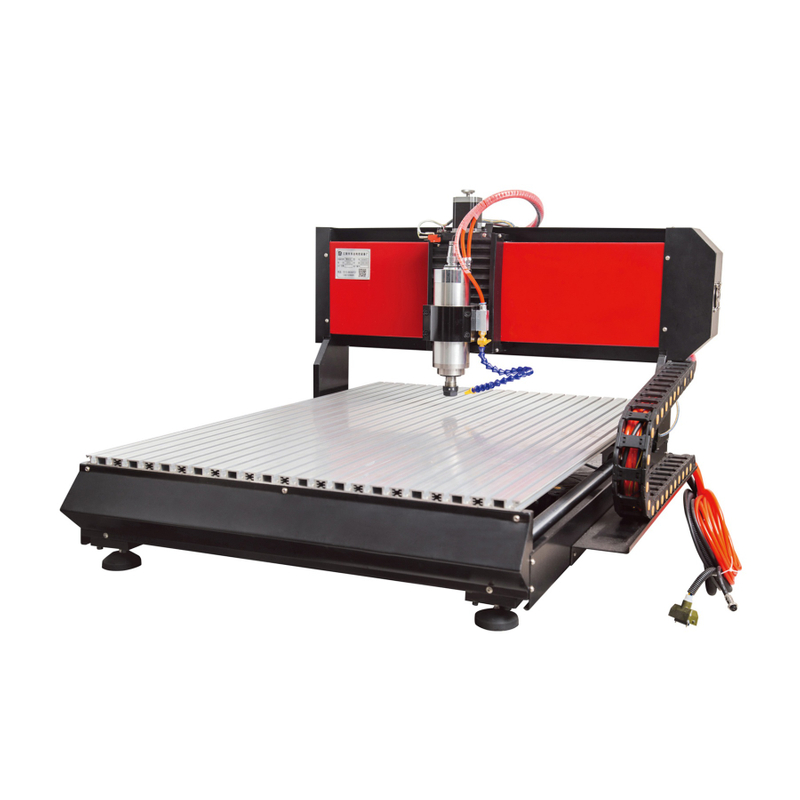
For this guide, a compact CNC router machine fits on a bench or occupies a small floor area. Typical models range from tiny 1610 and 3018 engravers to stronger 6040 or 6090 machines. They suit prototypes, custom signs, PCB work, crafts, educational use, and small-batch production. Many use stepper motors, compact controllers, and modest spindle options.
A full-size CNC router is normally a floor-standing machine built around sheet processing. A common 4×8 CNC router accepts an entire plywood, MDF, or acrylic sheet. Larger 5×10 tables support oversized panels and industrial nesting. These systems often add stronger frames, servo drives, vacuum hold-down, automatic tool changers, and production-focused controls.
Comparison Point
Compact CNC Router Machine
Full-Size CNC Router
Typical work
Prototypes, small parts, engraving, short runs
Cabinets, doors, panels, signs, batch production
Working area
Small desktop area to about 600×900 mm
Commonly 1300×2500 mm or larger
Installation
Bench or limited floor space
Dedicated production area
Material loading
Blanks, tiles, cut panels
Full sheets and oversized workpieces
Automation
Usually basic, depending on configuration
Vacuum table, ATC, tool sensing, loading options
Best buyer
Makers, schools, startups, small workshops
Cabinet shops, sign factories, production plants
This distinction prevents a common purchasing mistake. A machine should fit the largest regular part, not one rare project. Occasional oversized work can be tiled or outsourced. Regular full-sheet jobs usually justify a larger table because repeated repositioning reduces accuracy and consumes labor.
CNC Router Cost: Compare Total Ownership, Not Only Purchase Price
The purchase price creates the first difference. Published market guides place entry-level routers around $1,000–$3,000 and desktop systems near $1,000–$10,000. High-end routers can reach $150,000, depending on size and capability. These figures are planning ranges, not supplier quotations. Review the latest How Much is a CNC Machine? (Buying Guide) | Laguna Tools before setting a budget.
A compact CNC router machine normally costs less to buy, ship, install, and power. It may run from a standard electrical supply. A small unit also needs fewer rigging services and less material-handling equipment. However, an enclosure, dust extractor, computer, cutters, clamps, and software can raise the real startup cost.
Full-size CNC router cost extends beyond the machine invoice. Buyers may need freight, unloading equipment, reinforced flooring, higher-capacity power, compressed air, dust collection, and operator training. Vacuum pumps and automatic tool changers improve production, yet they add maintenance items and energy demand.
Cost Category
Compact CNC Router
Full-Size CNC Router
Machine and freight
Lower in most configurations
Higher, especially for heavy frames
Site preparation
Bench, enclosure, basic extraction
Rigging, floor planning, industrial services
Tooling and workholding
Collets, clamps, spoilboard, starter tools
Larger tool library, vacuum zones, tool holders
Labor cost per part
Low for short runs; rises during repeated loading
Lower during nested sheet and batch production
Downtime exposure
Smaller financial impact
Higher hourly impact during production stops
Expansion cost
Another compact machine may add flexible capacity
Automation may scale one production cell
Calculate total cost of ownership over three to five years. Include purchase, financing, freight, installation, tooling, utilities, maintenance, software, training, labor, and expected downtime. Then subtract saved outsourcing costs and useful resale value.
The cheaper machine can become expensive when every sheet needs cutting and repositioning. The larger router can also waste capital when it remains idle. Cost should follow the planned workload, not the largest available budget.
CNC Router Footprint and Workshop Requirements
The advertised machine dimensions never equal the complete CNC router footprint. Operators need room for doors, control cabinets, maintenance access, dust hoses, stock, finished parts, and safe movement. Full sheets also need loading clearance beside the table. Draw the entire work cell before comparing models.
A compact machine can fit a garage, school lab, design studio, or small workshop. It still needs a rigid bench and dependable chip collection. An enclosure helps control noise, debris, and accidental contact. Place the controller away from dust, and leave access for lubrication, spindle service, and emergency controls.
For a real scale reference, the 6040 CNC Router Machine 3 Axis 4 Axis 300W 800W 1500W MACH3 300x400mm lists a 750 × 570 × 390 mm frame. Its effective working area measures 400 × 570 × 75 mm. The aluminum frame and ball-screw transmission support engraving, cutting, and light milling in a limited space.
Measure doorways, lifts, and freight access before ordering. Check ceiling height near gantries and extraction pipes. Confirm local electrical and safety requirements. A machine only saves space when people can load, clean, and service it safely.
CNC Router Materials, Spindle Power, and Cutting Capability
Both formats can machine useful materials. Size alone does not decide cutting ability. Frame rigidity, spindle power, spindle torque, tool diameter, feed rate, workholding, and chip removal matter more. The material grade and required finish also change the result.
Compact CNC routers commonly cut wood, plywood, MDF, acrylic, PVC, foam, wax, PCB laminates, and similar materials. Rigid models can also engrave or lightly mill aluminum and brass. Use shallow passes, suitable cutters, secure clamping, and proper chip evacuation. A small CNC router for aluminum must resist vibration and maintain stable tool engagement.
Full-size routers bring larger tables and stronger production hardware. They handle full wood sheets, cabinet panels, plastics, composites, foam molds, and non-ferrous metal sheets. Higher spindle power supports larger tools or more aggressive cutting. It does not guarantee better parts when the frame, toolpath, or workholding remains weak.
Material or Job
Compact CNC Router Machine
Full-Size CNC Router
Wood crafts and signs
Excellent for small pieces and detail work
Excellent for large signs and nested production
MDF and plywood
Good after panels are cut down
Best for full-sheet furniture components
Acrylic and plastics
Strong choice for prototypes and short runs
Better for large panels and repeated batches
PCB and fine engraving
Well suited to small, precise work
Possible, but table capacity may be underused
Aluminum and brass
Light cuts on a rigid, suitable configuration
Better removal rates on properly equipped systems
Hardened steel
Generally unsuitable for router-style machines
Not assured; consider a CNC mill instead
Do not compare spindle watts alone. A 2.2 kW spindle on a flexible frame may chatter before using its available power. A lower-power spindle on a rigid machine can produce a cleaner finish. Collet size also limits cutter diameter, while Z travel limits thick workpieces and fixtures.
Ask suppliers for proven samples using your exact material, thickness, cutter, and finish standard. Request recommended feeds, speeds, pass depths, and workholding. This test reveals more than a broad statement saying a machine “cuts metal.”
CNC Router Productivity: Throughput, Labor, and Finished Parts
Productivity means acceptable finished parts per shift, not maximum feed speed. Measure setup, probing, tool changes, cutting, unloading, cleanup, rejected parts, and maintenance. A fast machine can still produce slowly when operators spend hours preparing each job.
A compact CNC router machine performs well for prototypes and varied short runs. Small fixtures are quick to change, and short toolpaths reduce waiting. One operator may supervise several enclosed units when the process allows it. This arrangement creates flexible capacity because one breakdown does not stop every job.
A full-size CNC router gains its advantage during sheet nesting and repeated production. It can cut many components from one sheet without manual repositioning. Vacuum hold-down reduces clamping time. An automatic tool changer handles drilling, pocketing, profiling, and finishing inside one program. Loading systems can reduce manual handling further.
Production Situation
More Productive Choice
Main Reason
One prototype or custom part
Compact
Faster setup and lower operating commitment
Many small, different orders
Compact or several compact units
Flexible scheduling and isolated downtime
Cabinet parts from 4×8 sheets
Full-size
Full-sheet nesting and fewer loading steps
Large signs or doors
Full-size
Part fits in one setup
Repeated multi-tool jobs
Full-size with ATC
Less manual tool-change time
Demand remains uncertain
Compact
Lower capital risk while testing the market
Use a simple capacity calculation before buying:
Good parts per shift = available production minutes ÷ average minutes per accepted part
Average time must include setup and handling. Add expected scrap, tool changes, and planned maintenance. Compare the result against real weekly demand, not an optimistic annual forecast.
Parallel compact machines may outperform one larger system for mixed small parts. One full-size router usually wins when work uses sheet area efficiently. The correct productivity answer comes from your product mix, batch size, and labor process.
How to Choose the Best CNC Router for Your Business
Start from the parts, not the machine brochure. List products from the previous six months and forecast the next two years. Record length, width, thickness, material, tolerance, finish, quantity, and delivery time. Highlight the work representing most revenue or recurring demand.
Then test each machine against five buying questions:
1. What is the largest regular workpiece? Choose a working area slightly larger than frequent parts and fixtures. Do not oversize for one unusual order.
2. Which material earns the most revenue? Match frame rigidity, spindle, tooling, and chip control to this material. Samples should prove the required finish.
3. How many accepted parts are required weekly? Calculate complete cycle time, labor, scrap, and realistic machine availability.
4. What space and utilities are available? Include loading aisles, extraction, power, air, service clearance, and material storage.
5. Which upgrades remove real bottlenecks? Vacuum hold-down, tool sensing, an ATC, or a rotary axis should solve measured problems.
Choose a compact CNC router machine when parts are small, batches vary, space is limited, or demand remains uncertain. It also fits education, product development, personalization, and local short-run manufacturing. A stronger 6040 or 6090 configuration can bridge the gap between entry-level engraving and larger production.
Choose a full-size CNC router when full-sheet work occurs daily. It suits cabinetry, furniture panels, doors, large signs, and repeated nested cutting. Its higher cost becomes easier to justify when automation lowers handling time and improves output.
Consider a hybrid plan when demand is mixed. Keep detail work and prototypes on a compact unit. Send sheet production to a full-size router or an outside partner. Upgrade only after outsourcing cost, delays, and lost orders exceed ownership costs.
Before purchasing, request a written specification, cutting test, acceptance standard, training plan, spare-parts list, warranty terms, and service response process. Compare quoted working area, not model names. This evidence turns a general size comparison into a defensible investment decision.
Conclusion
Compact routers reduce cost, space needs, and risk for small parts or varied batches. Full-size routers lead during full-sheet and high-volume production.
Match working area, materials, spindle, rigidity, automation, and support to real orders. Zhong Hua Jiang can help buyers compare suitable configurations before investing.
FAQs About Compact and Full-Size CNC Routers
Q: What is considered a compact CNC router machine?
A: It is a desktop, benchtop, or small-format CNC router designed for limited space. Its work area may range from small engraving dimensions to roughly 600 × 900 mm. Buyers should compare actual travel, frame dimensions, weight, and spindle specifications. Product names alone do not define useful capacity.
Q: Can a compact CNC router cut aluminum?
A: Yes, a rigid and correctly configured compact router can engrave or lightly mill aluminum. Use suitable cutters, conservative pass depths, secure workholding, and effective chip removal. Spindle power alone is not enough. Confirm the required alloy, thickness, tolerance, and finish through a supplier cutting test.
Q: Is a full-size CNC router always more accurate?
A: No. Accuracy depends on frame rigidity, motion components, calibration, tooling, workholding, and thermal stability. A compact machine can deliver excellent detail on small parts. A full-size router mainly adds working area, stronger production features, and higher throughput. Compare verified positioning and repeatability data.
Q: Is a compact CNC router suitable for a small business?
A: Yes. It can support prototypes, custom signs, personalized products, PCB work, small molds, and short-run parts. It offers a lower-cost way to test demand and reduce outsourcing. Check cycle time and weekly capacity before promising production volumes.
Q: What hidden costs come with a full-size CNC router?
A: Common costs include freight, rigging, floor preparation, electrical work, compressed air, dust collection, vacuum pumps, software, tooling, training, and maintenance. Stock handling also requires labor and space. Build a three-to-five-year ownership model before comparing quotations.
Q: When should a workshop upgrade to a full-size CNC router?
A: Upgrade when regular jobs exceed the compact machine’s work area or available capacity. Strong signs include daily sheet cutting, frequent repositioning, overtime, outsourcing delays, and lost large-part orders. Confirm the gain using accepted parts per shift and realistic ownership costs.
Join us as an exclusive distributor of CNC Router Machines and CNC Spindle Motors. As a professional manufacturer, we provide high-performance machines, attractive profit margins, technical training, and full marketing support. Build a strong partnership with us and expand your market with confidence.


 English
 简体中文
简体中文 繁體中文
繁體中文 العربية
 Français
 Русский
 Español
 Português
 Deutsch
 italiano
 日本語
日本語 한국어
한국어 Nederlands
 Tiếng Việt
 ไทย
ไทย Polski
 Türkçe
 አማርኛ
አማርኛ ພາສາລາວ
 ភាសាខ្មែរ
 Bahasa Melayu
 ဗမာစာ
ဗမာစာ தமிழ்
தமிழ் Filipino
 Bahasa Indonesia
 magyar
 Română
 Čeština
 Монгол
 қазақ
қазақ Српски
 हिन्दी
 فارسی
فارسی Kiswahili
 Slovenčina
 Slovenščina
 Norsk
Norsk Svenska
 українська
 Ελληνικά
 Suomi
Suomi Հայերեն
 עברית
עברית Latine
 Dansk
Dansk اردو
اردو Shqip
Shqip বাংলা
বাংলা Hrvatski
 Afrikaans
 Gaeilge
 Eesti keel
 Māori
Māori සිංහල
සිංහල नेपाली
 Oʻzbekcha
 latviešu
 অসমীয়া
 Aymara
 Azərbaycan dili
 Bamanankan
 Euskara
 Беларуская мова
 भोजपुरी
 Bosanski
 Български
 Català
 Cebuano
 Corsu
Corsu ދިވެހި
 डोग्रिड ने दी
 Esperanto
 Eʋegbe
 Frysk
Frysk Galego
 ქართული
 guarani
 ગુજરાતી
 Kreyòl ayisyen
 Hausa
Hausa ʻŌlelo Hawaiʻi
 Hmoob
Hmoob íslenska
 Igbo
Igbo Ilocano
 Basa Jawa
 ಕನ್ನಡ
ಕನ್ನಡ Kinyarwanda
 गोंगेन हें नांव
 Krio we dɛn kɔl Krio
 Kurdî
Kurdî Kurdî
Kurdî Кыргызча
 Lingala
 Lietuvių
 Oluganda
 Lëtzebuergesch
 Македонски
 मैथिली
 Malagasy
 മലയാളം
 Malti
Malti मराठी
मराठी ꯃꯦꯇꯥꯏ (ꯃꯅꯤꯄꯨꯔꯤ) ꯴.
 Mizo tawng
 Chichewa
 ଓଡ଼ିଆ
ଓଡ଼ିଆ Afaan Oromoo
 پښتو
پښتو ਪੰਜਾਬੀ
 Runasimi
 Gagana Samoa
 संस्कृत
 Gaelo Albannach
 Sepeti
 Sesotho
 chiShona
 سنڌي
سنڌي Soomaali
 Basa Sunda
 Wikang Tagalog
 Тоҷикӣ
 Татарча
 తెలుగు
 ትግንያውያን
 Xitsonga
 Türkmençe
 संस्कृत
 ئۇيغۇرچە
 Cymraeg
 isiXhosa
 ייִדיש
 Yorùbá
 isiZulu