You are here:Home » News » Air-Cooled Vs Water-Cooled CNC Spindle: Which Is Better for Your Router?
Air-Cooled Vs Water-Cooled CNC Spindle: Which Is Better for Your Router?
Views: 0 Author: Site Editor Publish Time: 2026-06-15 Origin: Site
Are you confused about which CNC spindle to choose?
In the world of CNC routing, spindles play a crucial role. They directly impact cutting precision and efficiency.
This article compares air-cooled and water-cooled CNC spindles. You’ll learn their pros and cons, helping you decide which type suits your needs best.
Understanding CNC Spindles
What is a CNC Spindle?
A CNC spindle is the core component of a CNC machine. It holds and rotates the cutting tool, making it essential for precision machining. The spindle's primary function is to convert electrical energy into mechanical motion.
Key Functions of a CNC Spindle:
Rotational Motion: It drives the cutting tool at various speeds, allowing for different machining tasks.
Tool Holding: The spindle securely grips the tool, ensuring stability during operation.
Power Transmission: It transmits power from the machine’s motor to the cutting tool.
In essence, the spindle impacts the quality of the workpiece, influencing everything from surface finish to cutting speed. A well-functioning spindle ensures accuracy and efficiency in machining processes.
Types of CNC Spindles
When it comes to CNC spindles, there are various types, each designed for specific applications. The two most common types are air-cooled and water-cooled spindles.
Air-Cooled Spindles
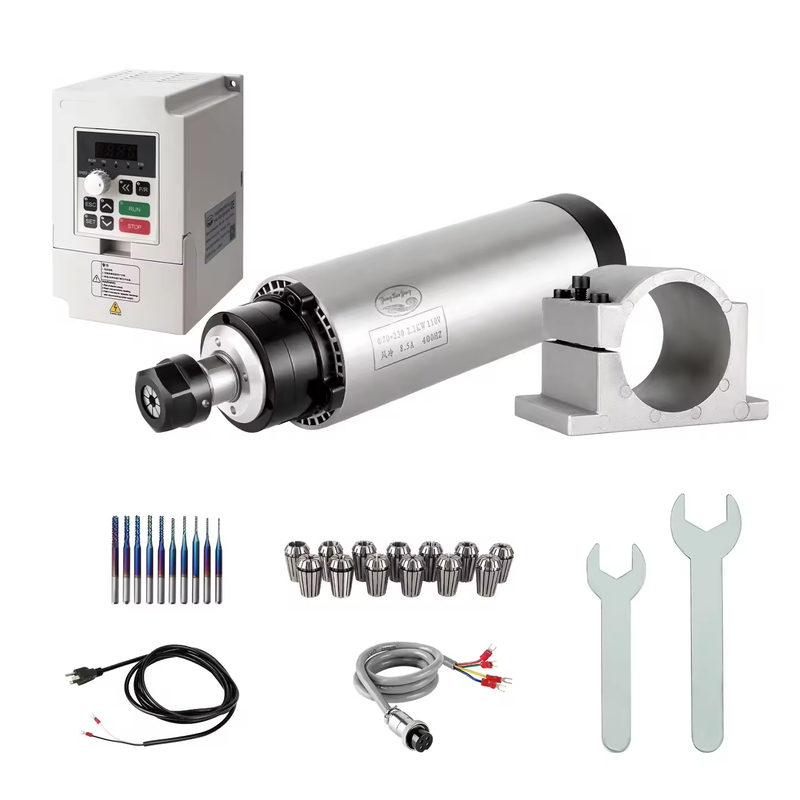
Air-cooled spindles use built-in fans to dissipate heat generated during operation. They are simpler in design and generally more affordable.
Advantages of Air-Cooled Spindles:
Low Maintenance: They don’t require coolant systems, making upkeep straightforward.
Cost-Effective: Typically, they have lower initial costs compared to water-cooled models.
Portability: Lightweight and easy to install, they are ideal for small workshops.
However, air-cooled spindles can struggle with heat dissipation during prolonged high-load operations. This can lead to overheating and reduced precision.
Water-Cooled Spindles
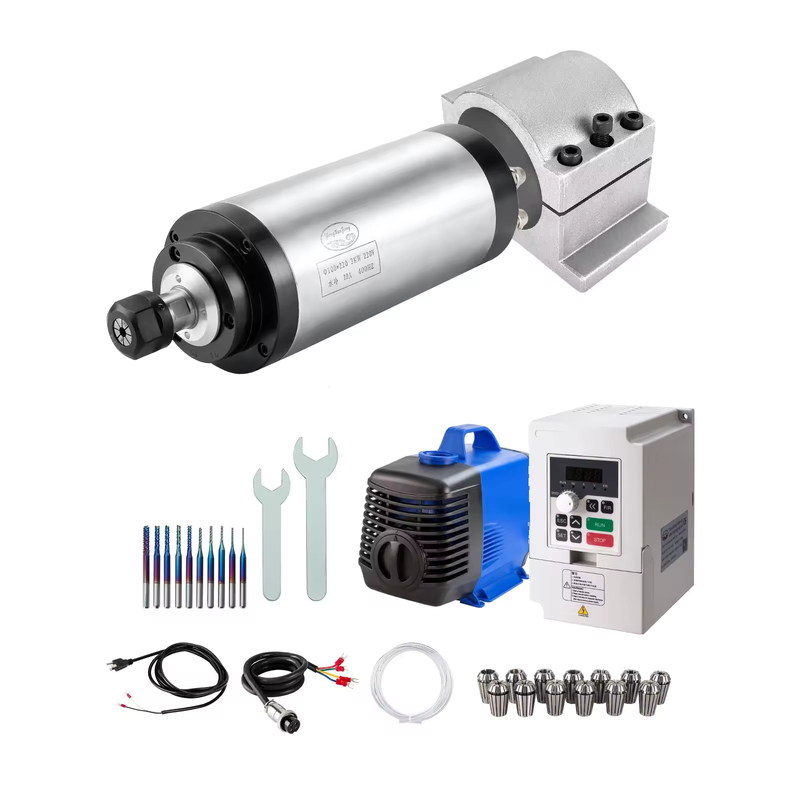
Water-cooled spindles utilize a closed-loop water circulation system to manage heat. This design allows for better thermal control, especially during extended machining sessions.
Benefits of Water-Cooled Spindles:
Superior Cooling: They maintain stable temperatures, preventing overheating even under heavy loads.
Quieter Operation: The absence of a fan results in significantly lower noise levels.
Higher Precision: Consistent temperatures enhance machining accuracy, making them suitable for detailed work.
Despite their advantages, water-cooled spindles come with increased complexity. They require additional components like pumps and reservoirs, which can raise initial costs and maintenance efforts.
Comparison of Air-Cooled and Water-Cooled Spindles
Here’s a quick overview of how these two spindle types stack up against each other:
Feature
Air-Cooled Spindle
Water-Cooled Spindle
Cooling Method
Internal fan
Closed-loop water circulation
Maintenance
Minimal
Moderate (coolant checks required)
Noise Level
Higher (due to fan)
Lower (quieter operation)
Cost
Generally lower
Higher initial investment
Best Applications
Intermittent tasks, lighter materials
Continuous operation, heavy-duty machining
Understanding the differences between air-cooled vs. water-cooled CNC spindles is vital for making an informed choice. Each type has its own strengths and weaknesses, depending on your specific needs and operating environment.
For example, Huajiang offers both types of spindles, ensuring that customers can find the right fit for their CNC routing applications. Whether you need the simplicity of air cooling or the efficiency of water cooling, knowing the fundamentals will help you choose wisely.
Pros and Cons of Air-Cooled CNC Spindles
Advantages of Air-Cooled Spindles
Air-cooled CNC spindles are popular for many reasons. They provide a practical solution for various machining tasks. Here’s a closer look at their benefits:
Low Maintenance Requirements:
Air-cooled spindles are designed for simplicity. They don’t have complex coolant systems, which means less upkeep. Regular cleaning of the fan and bearings is usually all you need.
Cost-Effectiveness:
One of the biggest draws is the lower initial investment. Air-cooled spindles are generally cheaper than their water-cooled counterparts. This makes them accessible for small businesses and hobbyists alike.
Portability and Ease of Installation:
These spindles are lighter and more compact. This makes them easy to install and move around. For example, Huajiang’s air-cooled spindles are specifically designed to fit into smaller workshops, making them ideal for users with limited space.
Summary of Advantages:
Feature
Description
Maintenance
Minimal upkeep needed
Cost
Lower initial investment
Portability
Lightweight and easy to install
Limitations of Air-Cooled Spindles
While air-cooled spindles have their perks, they also come with some drawbacks. It's essential to consider these limitations when choosing the right spindle for your needs.
Higher Noise Levels During Operation:
The built-in fans can generate significant noise. This can be a concern in quiet work environments or small shops where noise levels matter.
Lower Cooling Efficiency for Prolonged Use:
Air-cooled spindles may struggle to dissipate heat during long machining tasks. This can lead to performance issues, especially during extended operations.
Potential for Overheating in Heavy-Duty Applications:
When used in demanding conditions, air-cooled spindles risk overheating. This can result in reduced precision and even damage to the spindle over time.
Summary of Limitations:
Feature
Description
Noise Level
Can be significantly louder than water-cooled spindles
Cooling Efficiency
Less effective during prolonged use
Overheating Risk
More susceptible to heat-related issues
In summary, air-cooled spindles are a solid choice for many applications. They combine ease of use and affordability. However, it's crucial to weigh these advantages against their limitations. Understanding these factors will help you make an informed decision in the ongoing discussion of air-cooled vs water-cooled CNC spindles.
Pros and Cons of Water-Cooled CNC Spindles
Advantages of Water-Cooled Spindles
Water-cooled CNC spindles offer several key benefits, making them a preferred choice for many industrial applications. Their design focuses on efficient heat management, which is crucial for high-performance machining.
Superior Cooling Efficiency:
Water is an excellent heat conductor. Water-cooled spindles maintain optimal temperatures even under heavy loads. This is essential for long machining sessions where overheating can affect performance.
Quieter Operation:
Unlike air-cooled spindles, water-cooled models operate quietly. The absence of a fan makes them ideal for noise-sensitive environments, such as workshops where operators need to focus.
Higher Precision and Longer Lifespan:
Stable temperatures lead to less thermal expansion. This enhances machining precision and extends the spindle's lifespan. For instance, Huajiang's water-cooled spindles are designed to maintain consistent temperatures, ensuring precision in demanding applications.
Summary of Advantages:
Feature
Description
Cooling Efficiency
Excellent heat management
Noise Level
Much quieter than air-cooled spindles
Precision
Improved accuracy and longevity
Limitations of Water-Cooled Spindles
While water-cooled spindles have many advantages, they also come with some drawbacks. It's important to understand these aspects before making a decision.
Higher Initial Costs:
The upfront investment for water-cooled spindles is typically higher. This includes the cost of additional components like pumps and tanks. However, the long-term benefits often justify the initial expense.
Complexity of Installation:
Installing a water-cooled spindle requires more effort. You need to set up a cooling system, which can be complicated for users unfamiliar with such setups.
Maintenance Requirements:
Regular maintenance is necessary to manage the coolant effectively. This includes checking coolant levels, monitoring for leaks, and ensuring the system remains clean. Neglecting these tasks can lead to performance issues.
Space Requirements:
Water-cooled systems require more space due to additional components. This can be a concern in smaller workshops where every inch counts.
Summary of Limitations:
Feature
Description
Initial Cost
Higher investment needed
Installation Complexity
More components to install
Maintenance
Requires regular checks and upkeep
Space
Takes up more room than air-cooled models
Water-cooled spindles are a strong contender in the air-cooled vs water-cooled CNC spindle discussion. They excel in environments where precision and extended operation are critical. However, their higher costs and maintenance needs may not suit every user. Understanding these pros and cons will help you make the best choice for your CNC routing needs.
Key Considerations When Choosing Between Air-Cooled and Water-Cooled Spindles
Application Requirements
Choosing the right spindle depends heavily on your machining tasks. Different materials and operations have unique cooling needs.
Light Materials: If you’re primarily working with wood, plastics, or softer materials, air-cooled spindles are often sufficient. They handle short cycles well and are cost-effective for hobbyists.
Heavy-Duty Tasks: For metalworking or high-density composites, water-cooled spindles are the better choice. Their superior cooling efficiency helps maintain performance during prolonged use.
When to Choose:
Air-Cooled: Ideal for intermittent jobs and lighter materials.
Water-Cooled: Best for continuous operation and demanding materials.
Budget Considerations
Budget plays a significant role in your decision-making process. Understanding the initial costs versus long-term savings is crucial.
Initial Investment: Air-cooled spindles typically have a lower upfront cost. This makes them attractive for small businesses or hobbyists starting out.
Long-Term Costs: Water-cooled spindles, while more expensive initially, can lead to savings over time. Their efficiency may reduce tool wear and maintenance costs.
Maintenance Costs:
Air-cooled spindles require minimal upkeep.
Water-cooled spindles need regular coolant checks, which adds to ongoing costs.
Cost Aspect
Air-Cooled Spindle
Water-Cooled Spindle
Initial Cost
Lower
Higher
Maintenance
Minimal
Regular checks required
Long-Term Savings
Moderate
Potentially higher
Noise Level and Environment
Noise levels can greatly affect the working environment. This is especially important if your workspace is shared or in a residential area.
Air-Cooled Spindles: They tend to be noisier due to the fans. This can be distracting and uncomfortable in quiet settings.
Water-Cooled Spindles: These operate much quieter, making them suitable for noise-sensitive environments.
Performance in Different Settings:
Air-Cooled: Good for open workshops where noise is less of a concern.
Water-Cooled: Ideal for indoor environments or shared spaces.
Precision and Performance Needs
The cooling method directly impacts machining precision. Understanding your performance requirements is essential.
High-Speed Operations: Water-cooled spindles maintain stable temperatures, which is critical for high-speed machining. This leads to better accuracy and surface finishes.
Heavy-Duty Applications: The consistent cooling provided by water-cooled spindles helps prevent overheating, ensuring that the spindle performs optimally under load.
Impact on Precision:
Air-cooled spindles may experience thermal fluctuations, affecting precision during extended tasks.
Water-cooled spindles provide a more stable operating environment, enhancing overall machining quality.
Choosing between air-cooled vs water-cooled CNC spindles involves considering various factors. Each type has its strengths and weaknesses, and understanding these can help you make an informed decision tailored to your specific needs.
Why Choose Huajiang Spindles?
When it comes to selecting the right spindle for your CNC router, Huajiang stands out as a top choice. With over two decades of experience in spindle manufacturing and research and development, Huajiang has established itself as a leader in the industry.
Expertise in Spindle Manufacturing
Huajiang specializes in both air-cooled and water-cooled CNC spindles. Their extensive experience allows them to produce high-quality products tailored to various machining needs.
Innovative R&D:
Huajiang invests heavily in research and development. This focus ensures they stay ahead of industry trends and continuously improve their products.
Custom Solutions:
The company offers customized spindle solutions to meet specific customer requirements. This flexibility is crucial for businesses looking to optimize their machining processes.
Quality and Precision
Quality is a cornerstone of Huajiang’s manufacturing philosophy. Every spindle is designed to deliver exceptional performance and durability.
CE Certification and ISO 9001 Compliance:
Huajiang’s products are CE certified, ensuring they meet European safety and performance standards. Additionally, their ISO 9001 certification reflects a commitment to quality management systems.
High Precision Standards:
Huajiang’s spindles are engineered for precision, with runout tolerances often exceeding industry standards. This level of accuracy is vital for achieving high-quality finishes in machining tasks.
Strong Support and Warranty
Choosing Huajiang means you’re not just getting a spindle; you’re gaining a partner in your machining journey. Their commitment to customer support is evident in several ways.
Comprehensive Warranty:
Huajiang offers an impressive warranty on their spindles. This warranty provides peace of mind, knowing that you’re covered in case of any issues.
Responsive Customer Service:
Their customer service team is knowledgeable and ready to assist. Whether you have technical questions or need support, Huajiang is there to help.
Global Reach:
With a network that spans across continents, Huajiang is equipped to provide support wherever you are. This makes them a reliable choice for businesses operating internationally.
Feature
Huajiang Spindles
Expertise
20+ years in spindle manufacturing
Certifications
CE certified, ISO 9001 compliant
Warranty
Comprehensive warranty
Customer Support
Responsive and knowledgeable team
Choosing the right spindle can significantly impact your machining efficiency and product quality. With Huajiang's expertise, commitment to quality, and strong customer support, you can confidently navigate the air-cooled vs water-cooled CNC spindle debate. Whether you need high performance, durability, or tailored solutions, Huajiang has you covered.
Conclusion
In this article, we explored the differences between air-cooled and water-cooled CNC spindles.
Air-cooled spindles are cost-effective and easy to maintain, while water-cooled spindles offer superior cooling and precision.
When choosing, consider your specific machining needs. Assess factors like material type, budget, and noise levels.
By understanding these aspects, you can make an informed decision that best suits your requirements.
FAQ
Q: Which spindle type is better for beginners?
A: Air-cooled spindles are ideal for beginners due to their lower cost and simpler installation.
Q: Can I switch from air-cooled to water-cooled spindles later?
A: Yes, switching is feasible but may require additional setup and adjustments to your CNC machine.
Q: How do I maintain my CNC spindle?
A: Regularly clean the fan and bearings for air-cooled spindles. For water-cooled spindles, check coolant levels and monitor for leaks.
Q: What materials are best suited for each spindle type?
A: Air-cooled spindles work well with softer materials like wood, while water-cooled spindles excel with metals and dense composites.
Join us as an exclusive distributor of CNC Router Machines and CNC Spindle Motors. As a professional manufacturer, we provide high-performance machines, attractive profit margins, technical training, and full marketing support. Build a strong partnership with us and expand your market with confidence.


 English
 简体中文
简体中文 繁體中文
繁體中文 العربية
 Français
 Русский
 Español
 Português
 Deutsch
 italiano
 日本語
日本語 한국어
한국어 Nederlands
 Tiếng Việt
 ไทย
ไทย Polski
 Türkçe
 አማርኛ
አማርኛ ພາສາລາວ
 ភាសាខ្មែរ
 Bahasa Melayu
 ဗမာစာ
ဗမာစာ தமிழ்
தமிழ் Filipino
 Bahasa Indonesia
 magyar
 Română
 Čeština
 Монгол
 қазақ
қазақ Српски
 हिन्दी
 فارسی
فارسی Kiswahili
 Slovenčina
 Slovenščina
 Norsk
Norsk Svenska
 українська
 Ελληνικά
 Suomi
Suomi Հայերեն
 עברית
עברית Latine
 Dansk
Dansk اردو
اردو Shqip
Shqip বাংলা
বাংলা Hrvatski
 Afrikaans
 Gaeilge
 Eesti keel
 Māori
Māori සිංහල
සිංහල नेपाली
 Oʻzbekcha
 latviešu
 অসমীয়া
 Aymara
 Azərbaycan dili
 Bamanankan
 Euskara
 Беларуская мова
 भोजपुरी
 Bosanski
 Български
 Català
 Cebuano
 Corsu
Corsu ދިވެހި
 डोग्रिड ने दी
 Esperanto
 Eʋegbe
 Frysk
Frysk Galego
 ქართული
 guarani
 ગુજરાતી
 Kreyòl ayisyen
 Hausa
Hausa ʻŌlelo Hawaiʻi
 Hmoob
Hmoob íslenska
 Igbo
Igbo Ilocano
 Basa Jawa
 ಕನ್ನಡ
ಕನ್ನಡ Kinyarwanda
 गोंगेन हें नांव
 Krio we dɛn kɔl Krio
 Kurdî
Kurdî Kurdî
Kurdî Кыргызча
 Lingala
 Lietuvių
 Oluganda
 Lëtzebuergesch
 Македонски
 मैथिली
 Malagasy
 മലയാളം
 Malti
Malti मराठी
मराठी ꯃꯦꯇꯥꯏ (ꯃꯅꯤꯄꯨꯔꯤ) ꯴.
 Mizo tawng
 Chichewa
 ଓଡ଼ିଆ
ଓଡ଼ିଆ Afaan Oromoo
 پښتو
پښتو ਪੰਜਾਬੀ
 Runasimi
 Gagana Samoa
 संस्कृत
 Gaelo Albannach
 Sepeti
 Sesotho
 chiShona
 سنڌي
سنڌي Soomaali
 Basa Sunda
 Wikang Tagalog
 Тоҷикӣ
 Татарча
 తెలుగు
 ትግንያውያን
 Xitsonga
 Türkmençe
 संस्कृत
 ئۇيغۇرچە
 Cymraeg
 isiXhosa
 ייִדיש
 Yorùbá
 isiZulu