You are here:Home » News » 7 Best Small CNC Router Machines for Wood, Acrylic, PCB And Aluminum
7 Best Small CNC Router Machines for Wood, Acrylic, PCB And Aluminum
Views: 0 Author: Site Editor Publish Time: 2026-07-27 Origin: Site
Can you cut wood, tough acrylic, PCBs, and aluminum on a single desktop? Most cheap machines flex and fail under this multi-material challenge.
The desktop manufacturing revolution changed everything. Today, small CNC router machines bring industrial power straight to home workshops and labs.
However, mastering diverse materials requires a precise balance of structural rigidity and spindle power.
In this post, you will discover a transparent, benchmark-driven review of the 7 best small CNC router machines. We will help you find the perfect match for your specific creative workflow.
Core Selection Blueprint: How to Evaluate Small CNC Router Machines for Diverse Materials
Cutting multiple materials on a single desktop requires the right hardware balance. You cannot rely on guesswork when moving from soft pine to tough aerospace-grade aluminum. Let us break down the exact mechanical specifications you need to look for.
Frame Rigidity vs. Material Density
When milling non-ferrous metals, cutting forces spike heavily. A flimsy plastic frame will twist, shake, and break your tiny carbide cutting bits. Your small CNC router machines must feature a heavy-duty all-aluminum or reinforced steel chassis.
Solid metal framing eliminates harmful cutting vibrations entirely. This structural rigidity ensures clean cuts and holds tight industrial tolerances. For example, original manufacturers like Zhong Hua Jiang use thick alloy profiles to guarantee repeated positioning accuracy down to $\pm0.01\text{ mm}$.
Spindle Power and Speed Regulation
Your spindle motor acts as the true heart of your desktop setup. Different materials demand vastly different rotational speeds measured in revolutions per minute.
●High-Speed PCB Routing: Slicing through copper traces requires high-speed spindles reaching up to $24,000\text{ RPM}$. They deliver micro-precision cuts without pulling up fine circuit lines or ruining fiberglass substrates.
●Acrylic Melting Control: Plastic requires careful speed regulation to prevent ruined workpieces. You need precise spindle speed control to slice clean chips without melting the sensitive acrylic edges.
●Heavy Aluminum Milling: Cutting thick metal blocks calls for pure torque rather than raw speed alone. Upgrading to a 2.2KW water-cooled spindle provides the sustained cutting force needed for serious workshop production.
Drive Systems and Control Software
How your machine moves determines its final accuracy. Budget kits often use rubber belts, but these stretch over time under heavy metal workloads. A precision desktop setup utilizes 1204 ball-screw drive systems paired with chrome-plated linear guide rails. They eliminate backlash and provide smooth, unyielding mechanical movement.
On the electronic side, you must choose a control system that matches your workflow. Beginners love GRBL offline control boards because they run jobs via a handheld device without a computer connected. Conversely, professionals prefer MACH3 industrial computer USB control for handling complex, multi-axis graphic designs seamlessly.
We can compare these core hardware options directly to see how they impact your daily workshop operations:
Hardware Component
Entry-Level Choice
Professional Choice
Target Material Match
Drive Mechanics
Rubber Timing Belts
1204 Ball-Screws & Linear Rails
Aluminum & Hardwoods
Spindle Type
60W–300W DC Air-Cooled
1.5KW–2.2KW VFD Water-Cooled
Multi-Layer PCBs & Thick Alloys
Control System
GRBL Offline Handset
MACH3 USB Computer Software
Intricate 3D Carving & Etching
Deep-Dive Review: The 7 Best Small CNC Router Machines on the Market
Finding the right desktop machine requires looking closely at real specifications. We have merged famous retail market favorites alongside direct factory-direct manufacturer configurations. This complete overview helps you balance your budget, required footprint, and raw motor power.
Let us look at how the top three versatile platforms compare directly across key specifications:
Machine Model
Working Area ($mm$)
Spindle Power / Type
Primary Core Material Match
SainSmart PROVerXL 4030 V2
$400 \times 300 \times 110$
400W Air-Cooled ($10,000\text{ RPM}$)
Hardwoods & Aluminum Sheets
Zhong Hua Jiang 3040
$300 \times 400 \times 60$
$300\text{W}/800\text{W}/1500\text{W}$ Air-Cooled
Double-Layer PCBs & Crafts
Genmitsu 4040-PRO MAX
$400 \times 400 \times 78$
710W Trimmer Router ($30,000\text{ RPM}$)
Thick Acrylic & Aluminum Blocks
Top Performing All-Rounders and Powerhouses
The SainSmart Genmitsu PROVerXL 4030 V2 serves as an incredibly stable platform for tough milling tasks. Its 1204 ball-screw drive system and closed-loop stepper motors completely eliminate step loss under heavy structural workloads. The high positioning accuracy of $\leq \pm0.02\text{ mm}$ makes it an excellent, reliable partner for slicing dense hardwoods and aluminum sheets cleanly.
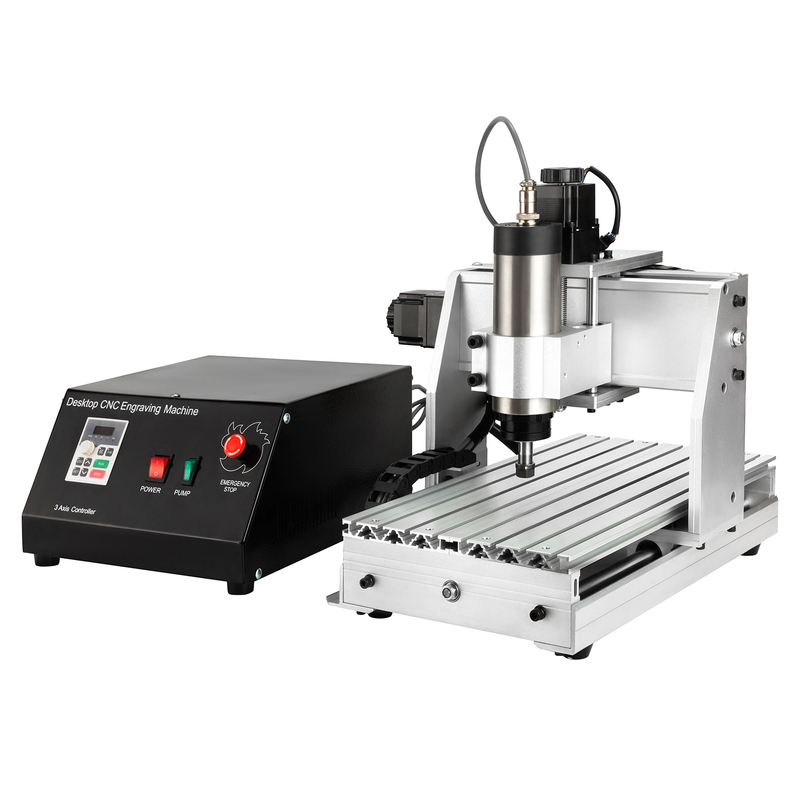
If you want the absolute best value, the Zhong Hua Jiang 3040 Desktop CNC Router is tough to beat. They build it with a full aluminum alloy gantry, integrated T-slot fixtures, and precision ball screws. Because the factory builds its own ER11 air-cooled spindles ($300\text{W}$ to $1500\text{W}$), you get immense cutting power without the third-party markup. It handles mixed material processing flawlessly, making it perfect for double-layer PCB etching, solid wood crafts, and soft aluminum part milling.
For creators chasing raw speed, the Genmitsu 4040-PRO MAX provides massive cutting overhead. Its heavy-duty compact trimmer router spins up to $30,000\text{ RPM}$ to plow through materials. Upgraded linear guide rails keep the entire chassis stable during deep carving procedures. It effortlessly slices through thick acrylic panels and aluminum sheets without bogging down.
Specialty Smart Systems and Commercial Batches
●Makera Carvera Air: This premium platform features a fully enclosed, dust-contained structure with automated calibration routines. Its smart auto-leveling system is optimized for clean, micro-precision technical PCB prototyping in modern apartment spaces, classrooms, and small labs. It handles intricate wood and acrylic engraving without making a mess.
●Zhong Hua Jiang 6040: When your workshop needs to scale up, this expanded $600 \times 400 \times 80\text{ mm}$ platform delivers commercial-grade output. Heavy-duty air-cooled spindles up to $2200\text{W}$ combine with a rigid aluminum frame to maintain $\pm0.01\text{ mm}$ repeated positioning accuracy during long runs. It is perfectly suited for batch production of wood furniture parts, thick acrylic molds, multi-layer PCBs, and medium-thickness aluminum blocks.
Entry-Level and Rapid Assembly Options
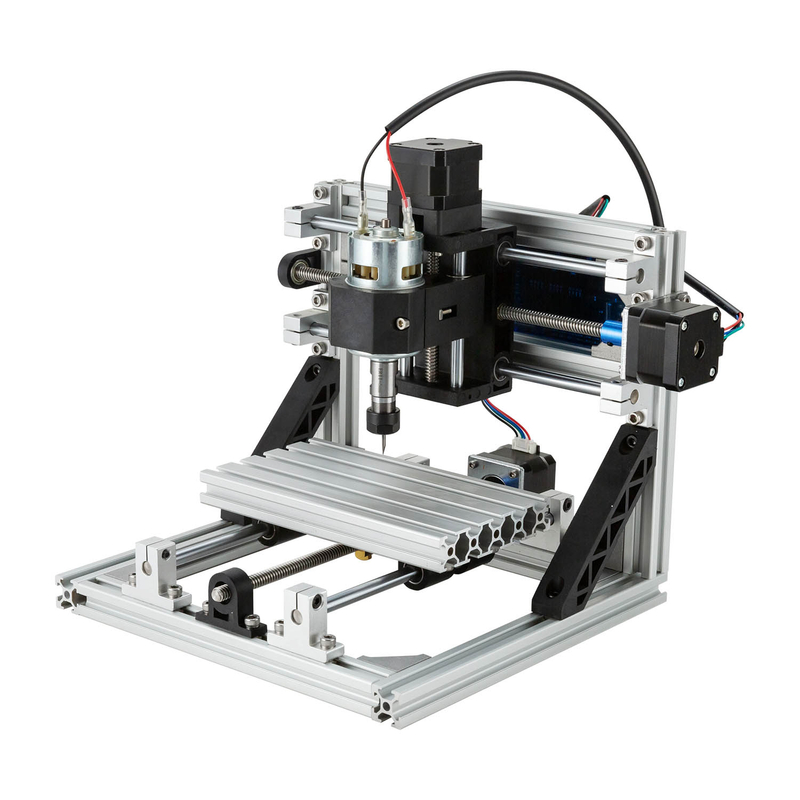
Many beginners start with the Lunyee 3018 Pro Ultra because it completely overhauls traditional cheap plastic kits. They added an all-metal frame, dual steel linear guides, and an upgraded 500W high-speed spindle to prevent machine flexing. It offers a highly affordable learning platform for light engraving on thin wood, acrylic sheets, and single-layer PCB boards.
If you hate long assembly manuals, the AtomStack C4 Pro arrives 70% pre-assembled right out of the box. You can complete the full hardware setup in less than 10 minutes. Its 200W high-torque spindle reaches $12,000\text{ RPM}$ under custom 32-bit software control. This design delivers zero-error industrial positioning accuracy within a very friendly, compact consumer footprint. It easily handles intricate carving tasks across stone panels, custom circuit boards, and soft metals.
Material-Specific Mastery: Operational Tips for Your Desktop CNC
Getting great results from your shop setup takes more than just turning on the power switch. You must treat every single material differently to avoid breaking your tooling or ruining expensive raw stock. Let us walk through the exact practical operational settings you need to master.
Wood and Acrylic Processing Tips
Wood seems easy but it presents unique challenges depending on the specific type you choose. Hardwoods generate heavy chips that you must clear quickly from the cutting path to avoid burning the wood fiber. Medium-density fiberboard produces extremely fine dust that clogs up standard machine rails if you do not use proper dust collection devices. Always lock your wooden blanks down using sturdy built-in T-slot worktable fixtures to prevent any material warping during heavy passes.
●Watch Your Heat: Acrylic requires careful temperature management during your cutting runs. If your spindle spins too fast without moving forward quickly enough, the plastic will instantly friction-weld itself directly to your cutting bit.
●Dial Back RPM: You must select correct low-RPM feed rates to slice clean chips cleanly instead of creating molten plastic mess. This simple adjustment keeps the cutting zone cool and maintains crystal-clear transparency on your finished acrylic signage edges.
●Match Your Bits: Use single-flute spiral upward bits for plastics because they throw the waste chips up and out of the groove instantly. This keeps your small CNC router machines moving smoothly without clogging the tool pathways.
PCB Production and Soft Aluminum Milling
Circuit board fabrication demands absolute precision down to the fraction of a millimeter. Utilizing a Z-axis automatic probe is absolutely mandatory for auto-leveling your work surface before you begin etching copper traces. Raw fiberglass blanks are rarely perfectly flat across their entire surface, which causes massive depth errors without calibration. The automatic probe maps the exact surface topography to ensure your machine engraves micro-precision copper traces cleanly without slicing too deeply right through the substrate board.
Milling aluminum pushes compact consumer hardware to its absolute structural limits. You must use highly rigid industrial-grade setups like the Zhong Hua Jiang 6040 to eliminate cutting chatter completely. Selecting the right mechanical connection parts ensures your cutting tool remains perfectly rigid under stress.
We can look at the exact hardware tooling configurations required for these advanced technical jobs:
Material Target
Recommended Collet Size
Bit Selection Type
Primary Operational Goal
Printed Circuit Boards
3.175 mm Standard Collet
Carbide V-Bits / PCB Drills
Perfect auto-leveled depth tracking
Thin Aluminum Plates
6 mm Heavy-Duty Collet
2-Flute Carbide End Mills
Elimination of tool vibration and breakage
Thick Aluminum Blocks
6 mm Heavy-Duty Collet
Single-Flute Aluminum Mills
Constant chip clearing under heavy torque
Always pair these technical materials with high-quality ER11 collets to ensure zero tool slippage. Using specialized bits combined with original patented low-vibration spindle systems allows you to process thin aluminum plates easily. Keep your depth of cut shallow and let the high-speed spindle motor do the work safely.
The Direct Manufacturer Advantage: Why Core Components Matter
Many buyers look only at the price tag when choosing a new desktop setup. They completely forget to check who actually built the heavy internal motor components. Let us talk honestly about why buying from a real component manufacturer protects your long-term wallet.
The Third-Party Procurement Trap
Dozens of generic assembly brands flood the online marketplace with cheap desktop kits. These businesses do not actually design or manufacture their own internal high-speed cutting hardware. Instead, they outsource their spindles and matching variable frequency drive inverters from lowest-bid third-party suppliers.
This outsourcing pattern creates a massive middleman markup that drives up overall retail machine costs significantly. Worse, it severely complicates your technical customer support when a component inevitably fails during operation. The machine seller blames the motor supplier, leaving you stuck without a working system for your business. You face long wait times and high replacement part prices just to get back to work.
The In-House Manufacturing Solution
Choosing a vertically integrated manufacturer completely rewrites your ownership experience over time. Companies like Changzhou Huajiang Electrical build their own patented CNC spindles and complete small CNC router machines in-house. They control the entire design cycle from raw metal casting to final electronic calibration.
●Lower Operational Overhead: Eliminating third-party suppliers means you enjoy significantly lower replacement part costs down the road. Your initial machine investment goes directly into premium structural materials rather than middleman corporate markups.
●Certified Quality Standards: Every single component passes unified quality control tests under strict international frameworks. Vertically integrated factories back their machinery with official CE and ISO 9001 certifications for predictable, long-term reliability.
●Robust Hardware Expandability: True manufacturers design their control systems with future upgrades directly in mind. You get plug-and-play installation interfaces for adding a 4th rotary axis, specialized dust collection devices, or custom vacuum tables easily.
We can look at the clear structural differences between these two supply chain models:
Operational Metric
Generic Assembly Brands
Integrated Factory Brands (e.g., Zhong Hua Jiang)
Spindle Sourcing
Outsourced to third-party plants
In-house patented manufacturing
Technical Support
Fragmented across multiple suppliers
Single point of direct factory contact
Component Quality
Inconsistent batches from open markets
Unified CE and ISO 9001 certified consistency
Upgrade Paths
Limited by generic control board wiring
Native ports for 4th-axis rotary upgrades
Buying from a real factory ensures your small CNC router machines receive original spare parts instantly. Your spindle and VFD inverter speak the exact same electronic language because the same engineering team built them both. This tight integration lowers cutting vibration, extends total tool life, and maximizes your daily workshop efficiency.
Summary & Final Verdict
Choosing the right small CNC router machines depends entirely on your project goals.
Beginners should pick the Lunyee 3018 Pro Ultra or Zhong Hua Jiang 3018. They offer fantastic value.
For versatile workshops, the SainSmart PROVerXL 4030 V2 or Zhong Hua Jiang 3040 excel at mixed-material production.
Need heavy-duty commercial power? Choose the Genmitsu 4040-PRO MAX or Zhong Hua Jiang 6040 for high-speed batch processing.
Join us as an exclusive distributor of CNC Router Machines and CNC Spindle Motors. As a professional manufacturer, we provide high-performance machines, attractive profit margins, technical training, and full marketing support. Build a strong partnership with us and expand your market with confidence.


 English
 简体中文
简体中文 繁體中文
繁體中文 العربية
 Français
 Русский
 Español
 Português
 Deutsch
 italiano
 日本語
日本語 한국어
한국어 Nederlands
 Tiếng Việt
 ไทย
ไทย Polski
 Türkçe
 አማርኛ
አማርኛ ພາສາລາວ
 ភាសាខ្មែរ
 Bahasa Melayu
 ဗမာစာ
ဗမာစာ தமிழ்
தமிழ் Filipino
 Bahasa Indonesia
 magyar
 Română
 Čeština
 Монгол
 қазақ
қазақ Српски
 हिन्दी
 فارسی
فارسی Kiswahili
 Slovenčina
 Slovenščina
 Norsk
Norsk Svenska
 українська
 Ελληνικά
 Suomi
Suomi Հայերեն
 עברית
עברית Latine
 Dansk
Dansk اردو
اردو Shqip
Shqip বাংলা
বাংলা Hrvatski
 Afrikaans
 Gaeilge
 Eesti keel
 Māori
Māori සිංහල
සිංහල नेपाली
 Oʻzbekcha
 latviešu
 অসমীয়া
 Aymara
 Azərbaycan dili
 Bamanankan
 Euskara
 Беларуская мова
 भोजपुरी
 Bosanski
 Български
 Català
 Cebuano
 Corsu
Corsu ދިވެހި
 डोग्रिड ने दी
 Esperanto
 Eʋegbe
 Frysk
Frysk Galego
 ქართული
 guarani
 ગુજરાતી
 Kreyòl ayisyen
 Hausa
Hausa ʻŌlelo Hawaiʻi
 Hmoob
Hmoob íslenska
 Igbo
Igbo Ilocano
 Basa Jawa
 ಕನ್ನಡ
ಕನ್ನಡ Kinyarwanda
 गोंगेन हें नांव
 Krio we dɛn kɔl Krio
 Kurdî
Kurdî Kurdî
Kurdî Кыргызча
 Lingala
 Lietuvių
 Oluganda
 Lëtzebuergesch
 Македонски
 मैथिली
 Malagasy
 മലയാളം
 Malti
Malti मराठी
मराठी ꯃꯦꯇꯥꯏ (ꯃꯅꯤꯄꯨꯔꯤ) ꯴.
 Mizo tawng
 Chichewa
 ଓଡ଼ିଆ
ଓଡ଼ିଆ Afaan Oromoo
 پښتو
پښتو ਪੰਜਾਬੀ
 Runasimi
 Gagana Samoa
 संस्कृत
 Gaelo Albannach
 Sepeti
 Sesotho
 chiShona
 سنڌي
سنڌي Soomaali
 Basa Sunda
 Wikang Tagalog
 Тоҷикӣ
 Татарча
 తెలుగు
 ትግንያውያን
 Xitsonga
 Türkmençe
 संस्कृत
 ئۇيغۇرچە
 Cymraeg
 isiXhosa
 ייִדיש
 Yorùbá
 isiZulu