You are here:Home » News » CNC Spindle Motor Types: Air-Cooled, Water-Cooled, ATC And High-Speed Spindles
CNC Spindle Motor Types: Air-Cooled, Water-Cooled, ATC And High-Speed Spindles
Views: 0 Author: Site Editor Publish Time: 2026-06-18 Origin: Site
Are you looking to enhance your CNC machining capabilities? Understanding the different CNC spindle motor types is crucial for achieving precision and efficiency.
CNC spindle motors are the heart of any CNC machine, powering tools for cutting, engraving, and milling. In this article, we’ll explore the various types of CNC spindle motors, including air-cooled, water-cooled, ATC, and high-speed spindles.
You’ll learn about their unique features, advantages, and how to choose the right one for your projects.
What Are CNC Spindle Motors?
CNC spindle motors are essential components in CNC machines, providing the necessary power to drive cutting tools. These motors convert electrical energy into mechanical energy, enabling precise movements for various machining tasks. Understanding CNC spindle motor types can help you select the right one for your specific applications.
Definition of CNC Spindle Motors
A CNC spindle motor is a high-precision electric motor designed specifically for CNC (Computer Numerical Control) applications. It rotates cutting tools at controlled speeds, allowing for accurate and efficient material removal. Spindle motors come in various types, including air-cooled, water-cooled, automatic tool change (ATC), and high-speed spindles. Each type serves different purposes based on the machining requirements.
Key Components of CNC Spindle Motors
CNC spindle motors consist of several key components, each playing a vital role in their operation:
Stator: The stationary part of the motor. It generates a magnetic field that drives the rotor.
Rotor: The rotating part connected to the spindle. It transfers torque to the tool holder.
Bearings: High-precision bearings reduce friction and support high-speed operation. They ensure smooth rotation and minimize vibrations.
Cooling Systems: Effective cooling systems, whether air or water-cooled, prevent overheating during prolonged use. This is crucial for maintaining performance and longevity.
Component
Function
Stator
Generates magnetic field for rotation
Rotor
Transfers torque to the tool holder
Bearings
Reduces friction and supports high-speed operation
Cooling System
Prevents overheating and maintains optimal performance
Importance of Spindle Motors in Achieving Precision and Efficiency
CNC spindle motors significantly impact the overall performance of CNC machines. Here’s why they are so important:
Precision: The accuracy of machining operations depends on the spindle motor's ability to maintain consistent speeds and torque. High-quality spindle motors allow for fine adjustments, enabling intricate designs and detailed work.
Efficiency: A well-functioning spindle motor enhances productivity. It reduces downtime by providing reliable performance, which is crucial for meeting tight production schedules. For example, water-cooled spindle motors can handle heavy-duty tasks without overheating, making them ideal for continuous operation.
Versatility: Different spindle motor types cater to various machining needs. For instance, ATC spindles facilitate quick tool changes, allowing for complex machining operations without manual intervention. High-speed spindles excel in applications requiring rapid rotations, such as engraving or micro-milling.
In summary, CNC spindle motors are the backbone of CNC machining, driving precision and efficiency across various applications. By understanding the different CNC spindle motor types and their components, you can make informed decisions that enhance your machining processes.
Types of CNC Spindle Motors
When it comes to CNC spindle motor types, understanding their unique features can help you make the right choice for your specific applications. Each type has its own advantages, disadvantages, and ideal use cases. Let’s dive into the most common types of CNC spindle motors to give you a clearer picture.
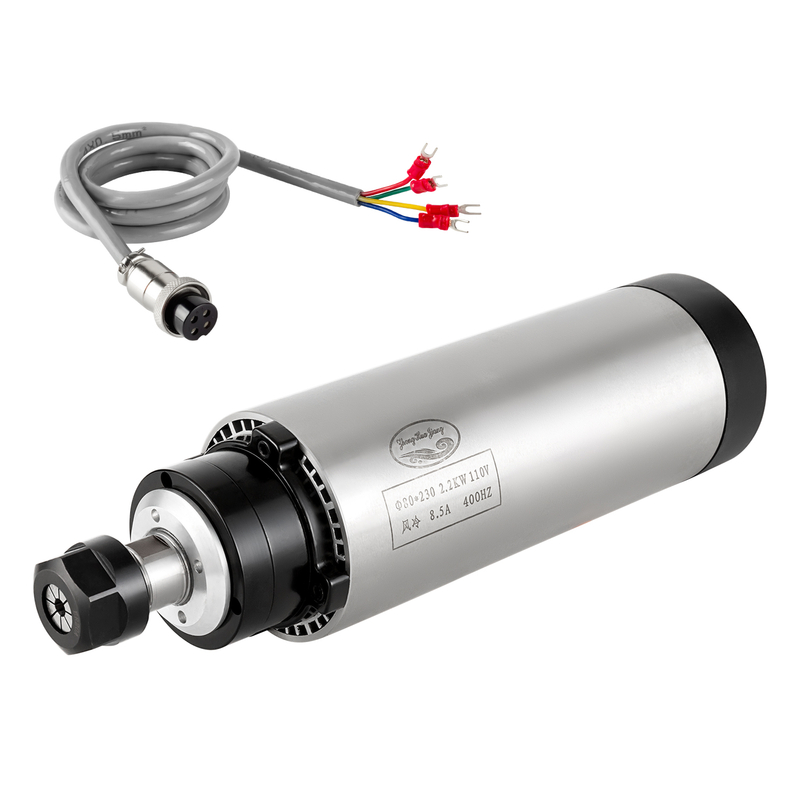
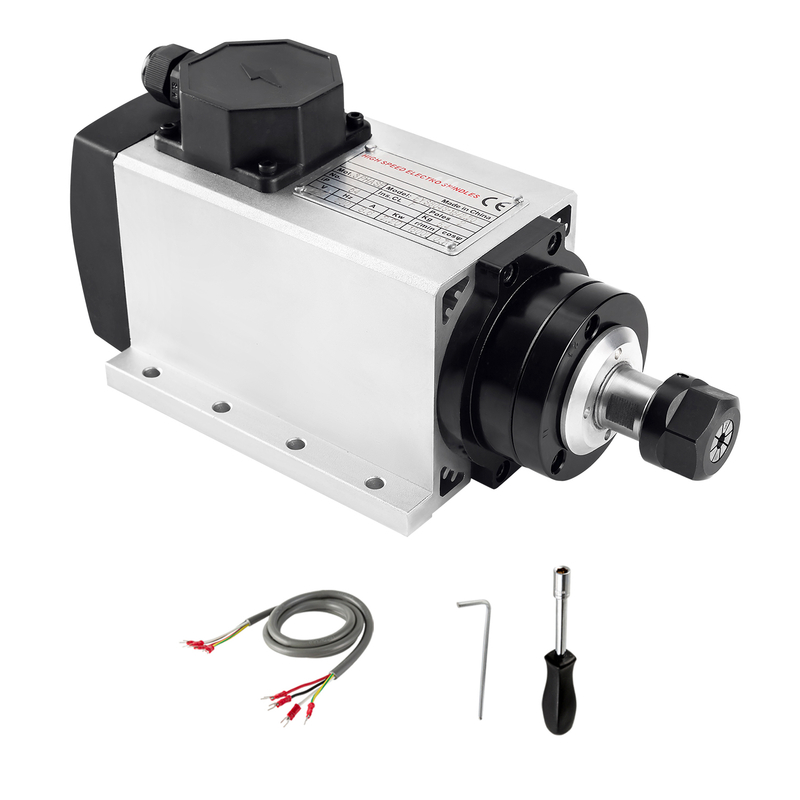
Air-Cooled Spindle Motors
Overview:
Air-cooled spindle motors rely on ambient air to dissipate heat produced during operation. This straightforward design makes them a popular choice for many users, especially in smaller workshops.
Advantages:
Cost-effectiveness: Generally, these motors are more affordable than water-cooled options, making them accessible for many businesses.
Simplicity in installation and maintenance: The installation process is uncomplicated, requiring minimal tools and expertise. Maintenance is also straightforward, often limited to cleaning the motor and ensuring proper airflow.
Suitable applications: They excel in woodworking and plastic cutting, where the demands are moderate. Their design is perfect for hobbyists and small-scale operations.
Disadvantages:
Limited cooling efficiency: Under heavy-duty tasks, air-cooled motors may struggle to maintain optimal temperatures, leading to performance issues.
Potential for overheating: Continuous operation in high-demand environments can result in overheating, which may damage the motor over time.
Best Practices for Use:
Ensure sufficient airflow around the spindle to maximize cooling efficiency.
Regularly check for dust accumulation and clean the motor to prevent overheating.
Example:
Huajiang's Air-Cooled Spindle Motorsprovide a range of power options (0.8KW–5KW), making them ideal for various woodworking applications, from simple cuts to more intricate designs.
Water-Cooled Spindle Motors
Overview:
Water-cooled spindle motors use a liquid cooling system to manage heat effectively, making them suitable for heavy-duty machining tasks.
Advantages:
Superior cooling capabilities: These motors can operate at higher power levels without overheating, allowing for extended machining sessions.
Quieter operation: The water-cooling system dampens vibrations and noise, creating a more pleasant work environment.
Extended lifespan: By maintaining optimal temperatures, water-cooled spindles tend to have longer lifespans, especially under continuous use.
Disadvantages:
Higher initial cost: The complexity of water-cooling systems leads to a higher upfront investment compared to air-cooled motors.
Maintenance requirements: Regular maintenance is needed for the cooling system, including checking coolant levels and inspecting for leaks.
Best Practices for Use:
Regularly monitor coolant levels and replace the coolant as needed to ensure efficient operation.
Inspect hoses and connections frequently to prevent leaks that could lead to operational failures.
Automatic Tool Change (ATC) Spindle Motors
Overview:
ATC spindle motors are designed to facilitate quick tool changes, significantly improving efficiency in machining operations.
Advantages:
Increased productivity: Automation reduces downtime between tool changes, allowing for continuous operation without manual intervention.
Reduced downtime: Quick tool changes mean less time spent on setup, enhancing overall production efficiency.
Disadvantages:
Higher cost and complexity: The initial setup can be more complicated, requiring specialized knowledge and equipment.
Compatibility considerations: Not all CNC machines are compatible with ATC spindles, so careful planning is necessary before installation.
Best Practices for Use:
Ensure proper programming and calibration for seamless operation.
Regularly maintain the tool holder to prevent wear and ensure smooth tool changes.
Example:
Huajiang's ATC Spindle Motorsare engineered for high torque and precise positioning, making them ideal for mass production environments where efficiency is key.
High-Speed Spindle Motors
Overview:
High-speed spindle motors are designed to operate at elevated RPMs, providing exceptional precision for intricate tasks.
Advantages:
Exceptional precision: They are ideal for detailed work, such as engraving or micro-milling, where accuracy is crucial.
High RPM capabilities: These spindles can achieve speeds often exceeding 24,000 RPM, allowing for fine detailing and superior surface finishes.
Disadvantages:
Lower torque at low speeds: High-speed spindles may not perform as well with heavier materials at lower RPMs, making them less versatile for all applications.
Potential for rapid wear on bearings: Continuous high-speed operation can lead to quicker degradation of bearings, requiring more frequent maintenance.
Best Practices for Use:
Use high-speed spindles primarily for applications requiring precision and detail.
Regularly check bearings and lubrication to extend their life, ensuring optimal performance during critical tasks.
Type
Advantages
Disadvantages
Air-Cooled
Cost-effective, simple installation
Limited cooling, potential overheating
Water-Cooled
Superior cooling, quieter operation
Higher cost, maintenance required
Automatic Tool Change
Increased productivity, reduced downtime
Higher cost, compatibility issues
High-Speed
Exceptional precision, high RPM capability
Lower torque at low speeds, rapid wear
Understanding the various CNC spindle motor types is essential for selecting the right motor for your machining needs. Each type offers unique benefits tailored to specific applications, making it easier to enhance your productivity and efficiency.
Choosing the Right CNC Spindle Motor
Selecting the right CNC spindle motor is crucial for optimizing your machining processes. With various CNC spindle motor types available, making an informed choice can greatly impact your productivity and efficiency. Here are some key factors to consider when choosing a spindle motor.
Factors to Consider When Selecting a Spindle Motor
1. Material Type
The type of material you’ll be working with plays a significant role in your spindle motor selection. Different materials require different power and speed levels.
Wood: Typically requires lower power and speed. Air-cooled spindles are often sufficient.
Metal: Requires higher power and torque, making water-cooled or high-speed spindles more suitable.
Composite: May need a balance of both, depending on the specific application.
2. Desired Power and Torque Requirements
Understanding the power and torque needed for your specific tasks is essential.
Power Ratings: Spindle motors are available in various power ratings, usually ranging from 0.8KW to 9KW. Higher power ratings are crucial for heavy-duty machining.
Torque Needs: Consider the torque requirements for your materials. Higher torque is needed for tougher materials like metals.
3. Cooling Method Suitability
The cooling method can affect the spindle’s performance and longevity.
Air-Cooled Motors: Ideal for lighter tasks and environments where heat buildup is minimal.
Water-Cooled Motors: Best for heavy-duty applications, providing superior cooling to prevent overheating during extended use.
4. Budget Considerations and Long-Term Investment
Your budget will influence your choice, but consider long-term value as well.
Initial Cost: While air-cooled motors may be cheaper upfront, water-cooled or ATC motors could offer better performance and efficiency in the long run.
Maintenance Costs: Factor in potential maintenance costs. Water-cooled systems may require more upkeep, while air-cooled systems are generally easier to maintain.
5. How to Match Spindle Motors with CNC Machine Specifications
Ensuring compatibility between your spindle motor and CNC machine is critical.
Mounting Compatibility: Check if the spindle motor fits your CNC machine’s mounting specifications.
Electrical Requirements: Ensure the motor's voltage and frequency match your machine's electrical system.
Control Systems: Verify that your CNC controller can handle the spindle motor type you choose, especially for ATC spindles.
Factor
Considerations
Material Type
Wood, metal, composite
Power and Torque
Power ratings (0.8KW–9KW), torque needs
Cooling Method
Air-cooled vs. water-cooled
Budget
Initial costs vs. long-term investment
CNC Compatibility
Mounting, electrical requirements, control systems
By carefully considering these factors, you can choose the right CNC spindle motor that aligns with your specific machining needs. Each spindle motor type offers unique benefits, so understanding your requirements will help you make the best decision for your operations.
FAQ
Q: What is the difference between air-cooled and water-cooled spindle motors?
A: Air-cooled spindle motors use fans to dissipate heat, making them suitable for lighter tasks, while water-cooled motors utilize a liquid cooling system, providing superior cooling for heavy-duty applications.
Q: How do I know which spindle motor is best for my application?
A: Consider factors like material type, desired power and torque, cooling method, and compatibility with your CNC machine to determine the best spindle motor for your needs.
Q: Can I use an ATC spindle motor for non-industrial applications?
A: Yes, ATC spindle motors can be used for non-industrial applications, but they are best suited for environments requiring high efficiency and quick tool changes.
Q: What are the common issues faced with high-speed spindles?
A: Common issues include lower torque at low speeds and rapid wear on bearings due to continuous high-speed operation, necessitating regular maintenance.
Q: How often should I perform maintenance on my CNC spindle motor?
A: Maintenance frequency depends on usage, but regular checks on bearings, cooling systems, and cleanliness should be performed every few months or as needed.
Conclusion
Choosing the right CNC spindle motor is crucial for optimal machining performance. Each motor type offers distinct advantages tailored to specific applications.
Assess your unique needs, such as material type and power requirements, before making a decision.
For tailored solutions, don’t hesitate to consult with experts who can guide you in selecting the best spindle motor for your operations.
Join us as an exclusive distributor of CNC Router Machines and CNC Spindle Motors. As a professional manufacturer, we provide high-performance machines, attractive profit margins, technical training, and full marketing support. Build a strong partnership with us and expand your market with confidence.


 English
 简体中文
简体中文 繁體中文
繁體中文 العربية
 Français
 Русский
 Español
 Português
 Deutsch
 italiano
 日本語
日本語 한국어
한국어 Nederlands
 Tiếng Việt
 ไทย
ไทย Polski
 Türkçe
 አማርኛ
አማርኛ ພາສາລາວ
 ភាសាខ្មែរ
 Bahasa Melayu
 ဗမာစာ
ဗမာစာ தமிழ்
தமிழ் Filipino
 Bahasa Indonesia
 magyar
 Română
 Čeština
 Монгол
 қазақ
қазақ Српски
 हिन्दी
 فارسی
فارسی Kiswahili
 Slovenčina
 Slovenščina
 Norsk
Norsk Svenska
 українська
 Ελληνικά
 Suomi
Suomi Հայերեն
 עברית
עברית Latine
 Dansk
Dansk اردو
اردو Shqip
Shqip বাংলা
বাংলা Hrvatski
 Afrikaans
 Gaeilge
 Eesti keel
 Māori
Māori සිංහල
සිංහල नेपाली
 Oʻzbekcha
 latviešu
 অসমীয়া
 Aymara
 Azərbaycan dili
 Bamanankan
 Euskara
 Беларуская мова
 भोजपुरी
 Bosanski
 Български
 Català
 Cebuano
 Corsu
Corsu ދިވެހި
 डोग्रिड ने दी
 Esperanto
 Eʋegbe
 Frysk
Frysk Galego
 ქართული
 guarani
 ગુજરાતી
 Kreyòl ayisyen
 Hausa
Hausa ʻŌlelo Hawaiʻi
 Hmoob
Hmoob íslenska
 Igbo
Igbo Ilocano
 Basa Jawa
 ಕನ್ನಡ
ಕನ್ನಡ Kinyarwanda
 गोंगेन हें नांव
 Krio we dɛn kɔl Krio
 Kurdî
Kurdî Kurdî
Kurdî Кыргызча
 Lingala
 Lietuvių
 Oluganda
 Lëtzebuergesch
 Македонски
 मैथिली
 Malagasy
 മലയാളം
 Malti
Malti मराठी
मराठी ꯃꯦꯇꯥꯏ (ꯃꯅꯤꯄꯨꯔꯤ) ꯴.
 Mizo tawng
 Chichewa
 ଓଡ଼ିଆ
ଓଡ଼ିଆ Afaan Oromoo
 پښتو
پښتو ਪੰਜਾਬੀ
 Runasimi
 Gagana Samoa
 संस्कृत
 Gaelo Albannach
 Sepeti
 Sesotho
 chiShona
 سنڌي
سنڌي Soomaali
 Basa Sunda
 Wikang Tagalog
 Тоҷикӣ
 Татарча
 తెలుగు
 ትግንያውያን
 Xitsonga
 Türkmençe
 संस्कृत
 ئۇيغۇرچە
 Cymraeg
 isiXhosa
 ייִדיש
 Yorùbá
 isiZulu