You are here:Home » News » CNC Router Vs CNC Mill: Differences in Structure, Speed, Materials And Cost
CNC Router Vs CNC Mill: Differences in Structure, Speed, Materials And Cost
Views: 0 Author: Site Editor Publish Time: 2026-08-03 Origin: Site
What if your CNC “upgrade” causes broken tools and scrap? The real issue is usually the machine matchup, not the operator.
Both are CNC machines, yet they’re built for different cutting realities. That means structure rigidity, spindle speed/torque, and material fit.
In this post, you’ll get a clear CNC Router vs CNC Mill explanation. You’ll learn which one fits softer large-sheet work and which one supports hard-metal precision parts.
By the end, you’ll know how to choose by your materials, cycle speed needs, and total cost of ownership.
CNC Router vs CNC Mill — Structure Differences (Why the Machine Looks Different)
When you shop for a new cutter, the first shock is physical. It looks like two different tool families. That’s because CNC Router vs CNC Milldesigns trade rigidity for speed in different ways. One machine wants to move fast over big flat work. The other wants to resist heavy cutting forces in metal.
CNC Router Structure: Gantry-Style and Lightweight Construction
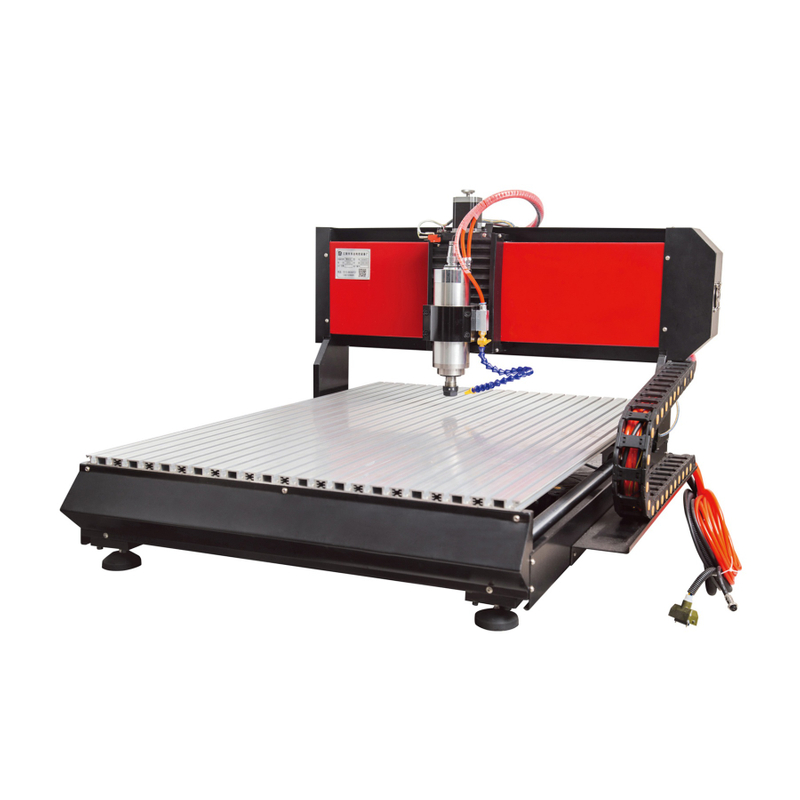
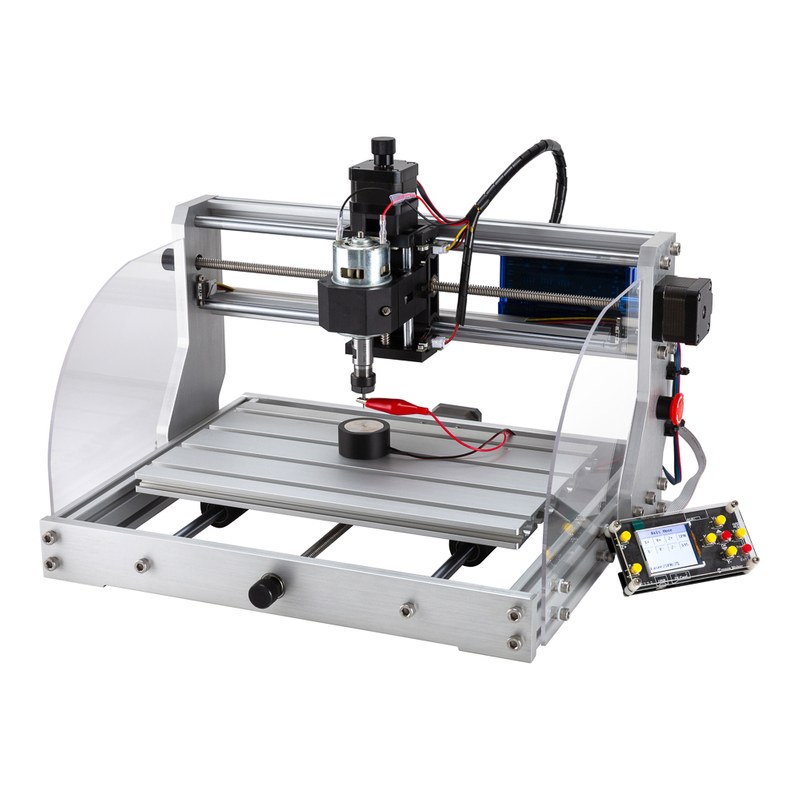
Most CNC router setups use a gantry structural design. Picture it like this: a fixed worktable stays still, while a moving cross gantry carries the cutting head. Then the spindle head travels across X/Y/Z, so it “skates” over the material area.
The practical effects show up fast on the shop floor.
They often prioritize fast motion and lower machine mass.
They aim for speed in softer material cutting, not maximum cutting-force resistance.
When your job is sheet work, they feel natural and efficient.
Frame choices usually reflect that goal. Many entry systems lean on aluminum / ABS composite frame ideas. You’ll also hear a “more aluminum, less cast iron” philosophy for routers. It helps keep weight down and acceleration up, especially for board routing and engraving runs.
Quick visual of a typical router layout (conceptual)
Part
Common movement
Why it matters
Worktable
stationary
clamps large boards safely
Gantry
moves in X/Y
covers big surface quickly
Spindle head
moves in Z
controls depth for engraving/cutting
Spindle
high-RPM profile
supports fast, light cuts
CNC Mill Structure: Fixed Heavy Bed + Stationary Spindle Column
A CNC mill starts from a different mindset: the machine must fight the cut. Many mills use a fixed heavy bed and a stationary spindle column. Conceptually, the cutting head stays rigid while the workbench moves under it.
That rigidity is the whole point. Mills commonly rely on a heavy cast iron bed / rigid frame to absorb cutting vibrations. When metal tools bite hard, the structure keeps its shape. The result is stability under heavy loads, especially during deep operations.
You’ll see the payoff in real work:
Better for deep grooves, drilling, and heavy stock removal
Better for tight dimensional control when loads stay high
More predictable results when chips and cutting forces get brutal
If you’ve ever watched a router “sing” during heavy passes, you know the difference immediately. Mills are built to damp those forces instead of accepting them.
Concept sketch: typical mill logic (not to scale)
Part
Common role
Typical outcome
Heavy bed
fixed, high mass
reduced vibration at cutting load
Spindle column
stationary & rigid
stable tool positioning
Workbench
moves in X/Y
precise part machining path
Tooling
carbide-style for metal
supports high-torque cutting cycles
CNC Router vs CNC Mill Structural Comparison — What Changes in Production
Now the part buyers care about: what changes when production starts.
More rigidity → higher cutting force capacity → better hard metal machining
Mills hold tight when tools plunge or pocket deeply. That structure helps maintain accuracy when the cutting load climbs.
Lighter moving gantry → good travel speed for sheets/boards → less suited for sustained deep metal loads
Routers can cover a lot of area quickly. They’re excellent when your cycles are fast and the passes stay within their rigidity limits.
Here’s a buyer translation that saves money. If you plan to cut thick hard metals, structure usually decides success more than marketing specs. The wrong structure can turn “precision” into scrap, because vibration and deflection show up as bad dimensions, damaged tools, and inconsistent surface finish.
Brand hint, smoothly placed: In spindle-focused product lines, manufacturers such as Zhong Hua Jiang (Huajiang Group) emphasize matching spindle systems and control behavior to the machine type. That alignment matters because rigidity and spindle control work together, not separately. It’s part of why router-type systems prioritize speed profiles, while mill-type systems prioritize high-torque, stable cutting conditions.
CNC Router vs CNC Mill — Speed, Torque, and Cutting Force
When people compare CNC Router vs CNC Mill, they usually talk about materials first. But the real story starts at spindle behavior. Speed and torque shape every pass you run. Then that shapes your surface finish, tool life, and scrap rate.
Routers and mills both remove material. They just do it in different “moods.” One tries to move quickly and cut lightly. The other fights heavy loads with brute stability.
CNC Router Performance Profile: High RPM, Lower Torque
A typical CNC router spindle pattern is high RPM and faster peripheral cutting. The bit spins fast so wood, plastic, and board materials shear cleanly. They also tend to produce lower torque than mills.
That trade-off changes your machining strategy. You usually keep cuts fast and relatively light. You avoid deep plunge moves into hard steel because the structure and spindle torque don’t want that fight.
Here’s how it feels in everyday production. A router excels when the job is mostly engraving, routing, and shallow profiles. Tool paths can run tight and quick without loading the machine like a metal-removal press.
Common “happy zone” materials:
wood, MDF, acrylic, foam, PVC
PCB-like work on boards and substrates
Typical cutting style:
fast travel, controlled depth, steady chip clearing
What to avoid:
sustained deep pockets in hard metals
CNC Mill Performance Profile: Low RPM, High Torque
A CNC mill uses a different spindle mindset: low rotating speed plus high torque. That pairing supports heavier machining cycles. It handles deep grooving, drilling, and stock removal without choking.
The machine also expects more cutting force. A mill structure can absorb those vibrations while keeping tool positioning stable. That’s why “precision metal work” usually starts with milling.
Cooling matters here too. Many mills rely on water-cooled spindle behavior for continuous high-load operation. Without that thermal control, tool wear rises and cutting consistency drops.
Practical “mill-friendly” operations:
drilling and tapping support
deep grooves and heavier pocketing
machining dense aluminum, steel, and stainless parts
Typical “watch-outs”:
chips and heat need management, not guesses
Factor
CNC Router (typical)
CNC Mill (typical)
Spindle profile
High RPM, lower torque
Low RPM, higher torque
Cutting force expectation
Light to medium loads
Heavy cutting loads
Best fit materials
Wood/MDF/acrylic/foam/PVC/PCB-like
Steel/stainless/titanium/copper alloys and more
Cooling approach
Often air-cooled
Often water-cooled for sustained load
VFD and Spindle Control — The Detail Buyers Should Not Ignore
Speed numbers only mean something when they stay stable during cutting. That’s why VFD (Variable Frequency Drive) / inverter matching becomes a system requirement, not an optional upgrade.
Routers and mills both need consistent spindle control. In real runs, unstable speed shows up as waviness, inconsistent tool wear, and repeating defects. It also affects how feed rate “lands” on the material.
For example, some spindle-focused manufacturers like Zhong Hua Jiang (Huajiang Group) design spindle systems together with VFD/inverter matching to support stable speed control across their router and mill-type lines.
That integration matters because it reduces tuning time. It also helps teams dial in reliable cutting parameters sooner.
What control stability helps with:
consistent surface finish
predictable tool life
repeatable production cycles
Feed Rate, Machining Cycle, and What You’ll See on the Shop Floor
On the floor, cycle time is where customers feel the difference. A CNC router often shortens cycle for soft materials because high-speed cutting keeps chip removal efficient. Tool paths can move quickly over large areas without demanding extreme torque.
A CNC mill often runs longer cycles because hard materials require careful feeds, deeper operations, and thermal management. But the mill “wins” because it can push through hard metal reliably. The cycle might be longer, yet the part comes out right the first time.
Quick troubleshooting link-style logic: if you push router depths/feeds into hard metals, vibration and damage risk increases. Bits chatter, surface quality drops, and you pay for it in broken tools and rework.
Shop-floor symptoms of the wrong pairing:
router chatter during hard passes
mill overheating from poor coolant handling
inconsistent dimensions due to unstable cutting forces
CNC Router vs CNC Mill — Materials Compatibility (Where Each Machine Works Best)
Choosing between CNC Router vs CNC Mill is really about materials and what the machine can “comfortably” push through. People often jump straight to RPM or brand specs. In practice, cutting force, rigidity, and chip behavior decide the outcome fast.
When we match the machine to the right material class, everything feels smoother: fewer tool breaks, cleaner edges, and less scrap. When we mismatch, it’s usually chatter, overheating, and dull cutters that cost more than the original savings.
Best Materials for CNC Routers (Soft & Medium-Density First)
A router typically shines on soft and medium-density workpieces. It’s tuned for fast, lighter cutting loads. That’s why board parts, engraving, and sheet work are where teams see the best consistency.
Here’s the router-friendly list from real shop patterns:
wood, MDF, acrylic, foam, PVC
PCB substrate and thin panel layers
leather for engraving, routing edges, and templates
Router performance has a boundary. Occasional shallow soft aluminum is possible, but long-term thick or hard steel cutting is a mismatch for typical router rigidity. If you try it anyway, they usually lose stability mid-pass. Tool wear spikes, and dimensions drift.
Best Materials for CNC Mills (Hard Metals and Heavy-Duty Stock)
A CNC mill is built for heavier cutting load and dense materials. Its structure can handle the vibration and force that come from deeper cuts. That’s why mills are the default for metal shops that need predictable machining.
Mills cover a “hard material full-spectrum” range, like:
solid aluminum block
copper alloy
carbon steel, stainless steel
titanium alloy
plus high-hardness engineering plastics and thick composites
Capability outcomes are practical and repeatable.
deep grooving that stays straight
drilling and controlled pocketing
heavy stock removal without the machine feeling “under attack”
Cooling also matters during hard-metal cycles. When loads stay high, thermal stability helps keep tool life and surface finish steady across batches.
CNC Router vs CNC Mill Material Fit Checklist (Quick Selection)
Use this quick pairing rule when you plan your production mix. It works because it connects material type to what the machine structure expects during cutting.
If your work is mostly boards/sheets + engraving/cutting, choose router-fit.
It’s efficient for panel routing, signage-style layouts, and repeatable engraving on soft materials.If your work is mostly hard metal parts + deep features + tight tolerance, choose mill-fit.
The rigidity and cutting-force capability help keep dimensions stable while tools do the heavy work.If you keep these two lines in mind, your machine choice becomes less of a guess. It becomes a match between what you cut and how the machine handles cutting force.
CNC Router vs CNC Mill — Cost Differences (Purchase Price vs Running Cost)
When buyers search CNC Router vs CNC Mill, they often start with the sticker price. That’s normal. Then reality hits: tooling, cooling, power, and downtime decide the real cost of owning it.
If you pick the wrong machine for your materials, you don’t just lose time. You pay through broken bits, scrap parts, and more maintenance work than your team planned.
Upfront Purchase Cost: What Drives the Price
Upfront cost mainly comes from two areas: machine structure and spindle engineering. Routers usually use a lighter frame and a system tuned for speed cutting. Mills commonly use a heavy cast frame and a more demanding spindle setup. Mills often need customized high-torque water-cooled spindle designs, which adds cost.
That’s why the “gap” can feel huge. For many shops, a customized small mill can be often ~2–4 times higher than a comparable top-tier router category, especially when spindle and thermal management differ.
Quick cost drivers (same size, different build priorities)
Mill builds: heavy cast frame, rigidity-focused design, high-torque spindle and cooling requirements
System matching: spindle + control behavior affects what you must buy next (cooling, VFD setup, accessories)
Cost driver category
CNC Router vs CNC Mill impact
Frame & structure
Router typically lower mass; Mill typically higher rigidity cost
Spindle engineering
Router optimized for high RPM style cutting; Mill optimized for high torque, often water-cooled
Thermal system
Router often air-cooling; Mill often requires coolant plumbing and management
Post-Operation Running Cost: The Hidden TCO Split
Here’s the part most teams underestimate. Even if a router costs less upfront, running costs depend on what your production actually demands. Routers often have less coolant-related expense because many setups use air cooling. They still need regular dust cleaning and standard maintenance, which is manageable.
Mills usually cost more to run. They expect higher power consumption. They also require coolant supply, fluid handling, and fluid replacement planning. Under heavy load, mills need more inspection and maintenance cycles to keep performance stable.
And then there’s “time-to-cost.” If a router is cheaper but your material mix pushes it beyond its comfort zone, you’ll see tool breakage and scrap. That turns the savings into hidden losses fast.
Router running-cost pattern:
less coolant fluid cost (often air-cooled)
routine dust cleaning and standard maintenance cadence
Mill running-cost pattern:
higher power usage
coolant supply + fluid costs over time
more frequent inspection under heavy cutting load
Tooling and Consumables (Costs That Change by Material)
Tool wear is the silent budget killer. Hard materials accelerate cutter wear. Higher cutting load also changes tool life dramatically. So the same bit purchase price can mean very different tool replacement timing.
In practice, it looks like this: a router job that stays in wood, MDF, acrylic, foam, PVC, and PCB-like work can stretch tooling life. A mill job cutting dense metals can demand sharper tool selection, more frequent replacements, and tighter process control to prevent early wear.
Why tool life changes:
hard materials accelerate cutter wear
high cutting load changes replacement cadence
cutting force consistency affects how evenly tools experience stress
FAQ
Q: What’s the main difference between CNC Router vs CNC Mill?
A: Structure and spindle profile. Routers fit softer sheet/wood/PCB work with high RPM and lower torque. Mills fit hard metals with low RPM, higher torque, and deeper cutting.
Q: Can a CNC router cut metal?
A: Yes for soft/non-ferrous materials or light aluminum work. It’s not ideal for heavy, deep cutting into hard steel long-term.
Q: Can a CNC mill engrave?
A: Yes. Mills can engrave, but their tooling and rigidity are primarily optimized for metal machining, so engraving may be a secondary operation.
Q: Which is more accurate: CNC Router or CNC Mill?
A: CNC mills are usually more accurate and repeatable for tight tolerances because of heavier rigidity.
Q: Which is cheaper overall: CNC Router vs CNC Mill?
A: Routers often cost less upfront. Mills can be cheaper in total cost when router limits would cause scrap or broken tools.
Q: Do CNC mills require coolant?
A: Usually yes, for hard-metal stability and overheating control.
Join us as an exclusive distributor of CNC Router Machines and CNC Spindle Motors. As a professional manufacturer, we provide high-performance machines, attractive profit margins, technical training, and full marketing support. Build a strong partnership with us and expand your market with confidence.


 English
 简体中文
简体中文 繁體中文
繁體中文 العربية
 Français
 Русский
 Español
 Português
 Deutsch
 italiano
 日本語
日本語 한국어
한국어 Nederlands
 Tiếng Việt
 ไทย
ไทย Polski
 Türkçe
 አማርኛ
አማርኛ ພາສາລາວ
 ភាសាខ្មែរ
 Bahasa Melayu
 ဗမာစာ
ဗမာစာ தமிழ்
தமிழ் Filipino
 Bahasa Indonesia
 magyar
 Română
 Čeština
 Монгол
 қазақ
қазақ Српски
 हिन्दी
 فارسی
فارسی Kiswahili
 Slovenčina
 Slovenščina
 Norsk
Norsk Svenska
 українська
 Ελληνικά
 Suomi
Suomi Հայերեն
 עברית
עברית Latine
 Dansk
Dansk اردو
اردو Shqip
Shqip বাংলা
বাংলা Hrvatski
 Afrikaans
 Gaeilge
 Eesti keel
 Māori
Māori සිංහල
සිංහල नेपाली
 Oʻzbekcha
 latviešu
 অসমীয়া
 Aymara
 Azərbaycan dili
 Bamanankan
 Euskara
 Беларуская мова
 भोजपुरी
 Bosanski
 Български
 Català
 Cebuano
 Corsu
Corsu ދިވެހި
 डोग्रिड ने दी
 Esperanto
 Eʋegbe
 Frysk
Frysk Galego
 ქართული
 guarani
 ગુજરાતી
 Kreyòl ayisyen
 Hausa
Hausa ʻŌlelo Hawaiʻi
 Hmoob
Hmoob íslenska
 Igbo
Igbo Ilocano
 Basa Jawa
 ಕನ್ನಡ
ಕನ್ನಡ Kinyarwanda
 गोंगेन हें नांव
 Krio we dɛn kɔl Krio
 Kurdî
Kurdî Kurdî
Kurdî Кыргызча
 Lingala
 Lietuvių
 Oluganda
 Lëtzebuergesch
 Македонски
 मैथिली
 Malagasy
 മലയാളം
 Malti
Malti मराठी
मराठी ꯃꯦꯇꯥꯏ (ꯃꯅꯤꯄꯨꯔꯤ) ꯴.
 Mizo tawng
 Chichewa
 ଓଡ଼ିଆ
ଓଡ଼ିଆ Afaan Oromoo
 پښتو
پښتو ਪੰਜਾਬੀ
 Runasimi
 Gagana Samoa
 संस्कृत
 Gaelo Albannach
 Sepeti
 Sesotho
 chiShona
 سنڌي
سنڌي Soomaali
 Basa Sunda
 Wikang Tagalog
 Тоҷикӣ
 Татарча
 తెలుగు
 ትግንያውያን
 Xitsonga
 Türkmençe
 संस्कृत
 ئۇيغۇرچە
 Cymraeg
 isiXhosa
 ייִדיש
 Yorùbá
 isiZulu