You are here:Home » News » Best CNC Spindle Motor Sizes for Wood, Aluminum, Acrylic, And Plastics
Best CNC Spindle Motor Sizes for Wood, Aluminum, Acrylic, And Plastics
Views: 0 Author: Site Editor Publish Time: 2026-08-21 Origin: Site
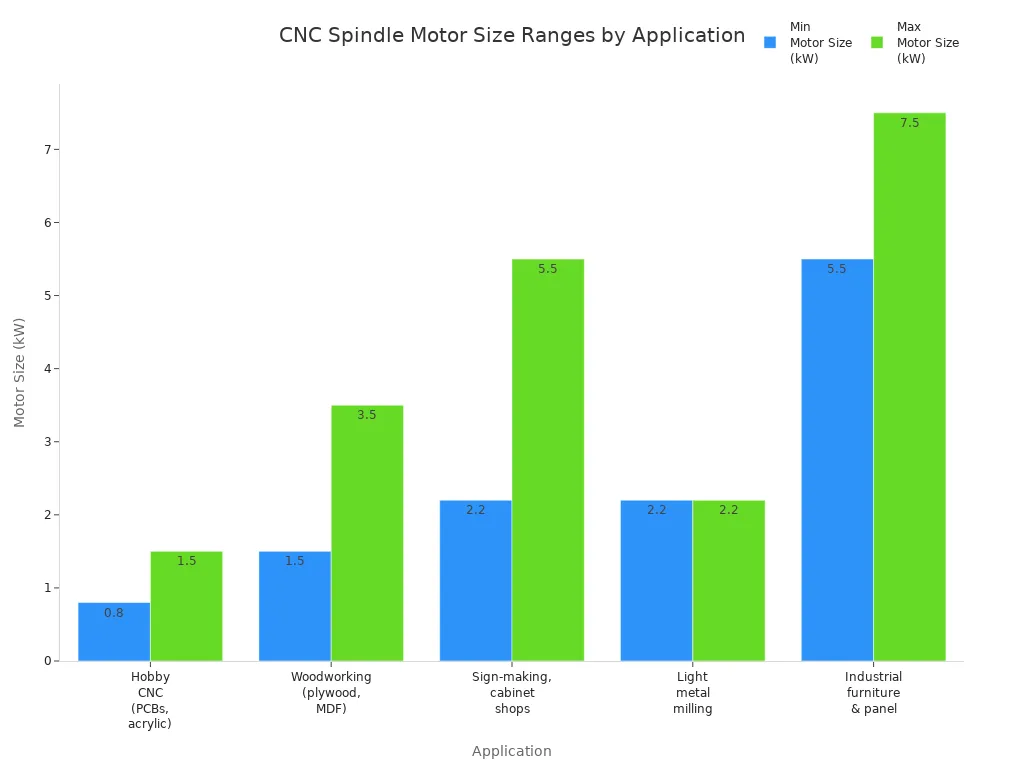
Choosing the right CNC spindle motor size is essential for top performance and material compatibility. For most applications, you will find these recommended spindle motor ranges:
Application
Motor Size Range (kW)
Notes
Woodworking (plywood, MDF, 2D/3D carving)
1.5 kW – 3.5 kW
Good torque, precision finish
Sign-making, cabinet shops
2.2 kW – 5.5 kW
Supports longer cycles, stable speed
Light metal milling (aluminum, brass)
2.2 kW
Quieter, cooler for prolonged runs
Industrial furniture & panel processing
5.5 kW – 7.5 kW
High torque, production reliability
Hobby CNC (PCBs, acrylic, MDF models)
0.8 kW – 1.5 kW
Compact, cost-effective
You need the correct spindle size to match your project’s needs. As a leading CNC spindle motor manufacturer, Zhong Hua Jiang delivers reliable solutions with a wide product range and deep industry expertise.
Why Spindle Size Matters in CNC
Cutting Performance and Material Compatibility
When you select the right spindle sizing for your cnc machine, you set the foundation for precise cutting and efficient production. The spindle sizing directly impacts how well you can cut different materials, from wood to aluminum. If you use the wrong sizing, you may see poor surface finish or even tool breakage.
Increasing spindle rpm can reduce surface roughness, which means you get a smoother finish on your workpiece.
Proper spindle sizing ensures you have enough torque and horsepower for heavy cutting, especially when working with tough materials.
The spindle sizing and shank taper must match the weight and length of your cutting tools. This match helps you avoid vibration and maintain accuracy.
For high-speed cutting of hard materials, a larger spindle taper supports the extra force needed.
Zhong Hua Jiang has developed advanced spindle motors that address these sizing challenges. Their research and innovation help you achieve the best results for every material.
Power, RPM, and Cooling Factors
You must consider power, rpm, and cooling when choosing spindle sizing for your cnc projects. These factors influence cutting speed, tool life, and overall efficiency. Higher spindle power allows you to increase material removal rates, but it also raises energy consumption. As you increase radial immersion, the chip load on the cutting edge grows, which means you need more power for each cut. Cooling systems, such as air-cooled or water-cooled designs, help manage heat during high rpm operations and heavy cutting.
Here is a quick reference for spindle sizing by material:
Material Type
Recommended Spindle Motor Type
Power (kW)
RPM
Cooling Type
Woodworking & Plastics
Air-cooled, lower power motors
3 - 5
18,000 - 24,000
Air-cooled
Aluminum & Light Metals
Water-cooled, mid-range power motors
5 - 10
10,000 - 20,000
Water-cooled
Steel & Hard Metals
Water-cooled, high torque motors
10+
5,000 - 10,000
Water-cooled
Composite Materials
High-speed, low-torque motors
4 - 6
20,000 - 30,000
Air-cooled
You can trust Zhong Hua Jiang to provide spindle sizing solutions that match your cnc needs, whether you focus on high-speed cutting or heavy cutting of advanced materials.
Wood Spindle Sizing Guide
Recommended Spindle Power for Wood
Selecting the right spindle power for wood projects ensures you achieve clean cuts, smooth engraving, and reliable performance. You should match the spindle power to your application type and the hardness of the wood. For most woodworking tasks, you can refer to the following table:
Application Type
Recommended Spindle Power Range
Hobby CNC Router Machine
1.5KW to 3.0KW
CNC Wood Router
2.2KW to 4.5KW
Small CNC Router Machine
2.2KW to 3.0KW
You need higher spindle power for hardwood cutting or large-scale production. High-power spindles deliver the torque and speed required for deep cuts and heavy-duty engraving. For softwoods or detailed engraving, lower spindle power provides better control and precision. Always consider the type of wood and the complexity of your project before making a decision.
CNC Router Motor Sizing for Wood Projects
CNC router motor sizing for wood projects depends on several important factors. You should evaluate the following before choosing your spindle:
Motor types (air-cooled or water-cooled)
Torque requirements for your specific cut
Wood material types (softwood, hardwood, composite)
Application and duty cycle (continuous or intermittent use)
Compatibility with your control systems
Choosing the right motor affects your cnc machine’s reliability and value. You should analyze each axis, size the motors and power transmission components, and ensure the system meets your requirements without overloading. This approach helps you avoid downtime and poor machining accuracy. When you select high-power spindles for hardwood cutting, you gain the ability to handle demanding engraving and cutting jobs with confidence.
Tips for Woodworking Applications
You can maximize your results in woodworking by following these best practices:
Use high-power spindles for hardwood cutting and deep engraving.
Select spindle power based on the hardest wood you plan to cut.
Maintain your spindle regularly to prevent premature failures and reduce maintenance expenses.
Choose spindles with high-quality bearings for better accuracy, lower vibration, and longer service life.
Plan for replacement part availability and energy efficiency to minimize downtime risks.
Bearings play a critical role in your spindle’s performance. High-quality bearings improve rotational accuracy, reduce vibration, and increase the lifespan of your spindle. You should always prioritize these features when selecting a spindle for wood engraving and cutting.
Aluminum Spindle Sizing Guide
Recommended Spindle Power for Aluminum
When you work with aluminum, you need to select the right spindle power to achieve clean, accurate results. Aluminum cutting requires more torque and stability than wood or plastics. If you use a spindle with too little power, you risk poor surface finish and tool wear. For most aluminum cutting tasks, you should consider the following spindle power options:
Spindle Power (kW)
Application
0.8
Suitable for light aluminum cutting
1.5
Recommended for deeper cuts
1.25 hp
Alternative option for aluminum work
You can use a 0.8 kW spindle for light aluminum cutting, such as engraving or shallow passes. For deeper cuts or more demanding jobs, a 1.5 kW spindle provides the extra torque and stability you need. Some users also choose a 1.25 hp motor for reliable aluminum cutting performance. Always match your spindle power to the thickness and hardness of your aluminum workpiece.
Cooling and RPM Considerations
Aluminum cutting generates heat, but not as much as harder metals. You need to keep your spindle cool to maintain accuracy and extend tool life. Most aluminum cutting applications require spindle speeds above 10,000 RPM. High spindle speed helps you achieve smooth cuts and prevents material from sticking to your tools. Unlike steel or titanium, which demand aggressive water or flood cooling, you can often manage aluminum with mist or air cooling. This approach keeps your spindle and workpiece at the right temperature without overcomplicating your setup.
Use air-cooled or mist-cooled spindles for most aluminum cutting jobs.
Maintain spindle speeds above 10,000 RPM for best results.
Monitor spindle temperature during long cutting cycles.
CNC Router Motor Sizing for Aluminum
Selecting the right motor for aluminum cutting involves more than just power. You must consider the type of spindle, the rigidity of your CNC machine, and the size of your cutting tools. For most aluminum cutting projects, a spindle in the 1.5 kW range offers a good balance of power and control. If you plan to cut thicker aluminum or run your machine for long periods, you may benefit from a high-power spindle.
Here are some key points to guide your selection:
Match spindle power to your cutting depth and tool diameter.
Choose a spindle with stable bearings to reduce vibration during aluminum cutting.
Ensure your CNC machine frame can handle the extra force from high-power spindles.
Select a motor that supports both high RPM and reliable torque for aluminum cutting.
You can achieve precise, efficient aluminum cutting by choosing the right spindle and motor combination. Always consult your CNC machine’s specifications and consider your typical project requirements before making a final decision.
Acrylic Spindle Sizing Guide
Recommended Spindle Power for Acrylic
When you work with acrylic, you need to select the right spindle power to achieve clean, polished edges. For most cnc applications, a spindle with 1.5 kW to 3.0 kW power delivers the best results. This range gives you enough torque for smooth cuts without risking melting or chipping. High-power motors can handle thicker sheets and longer production runs, but you should match the spindle power to your project size and detail level.
Application Type
Recommended Spindle Speed (RPM)
Intricate Detail Work
16,000 - 18,000
General Cutting and Pocketing
10,000 - 15,000
Thicker Acrylic Sheets (>12mm)
8,000 - 12,000
You should always check your spindle’s rated power and speed before starting a new job. This step helps you avoid overheating and ensures a professional finish.
Spindle Speed and Cutter Size
Spindle speed plays a critical role when you cut acrylic. You want to use a spindle speed between 16,000 and 18,000 RPM for detailed work. For thicker materials, lower the speed to prevent melting. The right cutter size also matters. Many professionals recommend single flute upcut bits designed for acrylic. These bits clear chips quickly and reduce heat buildup.
Use carbide uncoated bits for durability and clean edges.
For a clean cut, try an aluminum bit with a spindle speed of 16,000 RPM and a feed rate of 80 inches per minute.
Prevent melting by using a spindle speed of 18,000 RPM and a feed speed of 1500 mm/min.
CNC Router Motor Sizing for Acrylic
Choosing the right motor for acrylic projects means balancing spindle power, speed, and tool compatibility. A 1.5 kW to 3.0 kW motor gives you flexibility for both fine engraving and deep cutting. Make sure your spindle supports the recommended spindle speed ranges for acrylic. If you plan to work with a variety of materials, select a high-power spindle that can adjust to different speeds and loads. This approach ensures you get smooth, chip-free results every time you cut acrylic.
Plastics Spindle Sizing Guide
Recommended Spindle Power for Plastics
You need to select the right spindle power for plastics to achieve clean and accurate cuts. Most plastics, including foam, PVC, and acrylic sheets, respond well to spindle power in the range of 0.8kW to 2.2kW. This range gives you enough torque for smooth cutting without risking melting or excessive vibration. If you work with softer materials, you can use lower spindle power. For thicker or harder plastics, choose a motor with higher power to maintain consistent performance.
Plastic Type
Recommended Spindle Power (kW)
Foam, Softwoods
0.8 – 1.5
PVC, Acrylic Sheets
1.5 – 2.2
Hard Plastics
2.2
Spindle Speed and Chip Clearance
Plastics require higher spindle speed compared to metals. You must avoid melting by keeping spindle speed elevated during cutting. Most professionals recommend spindle speed between 16,000 and 24,000 RPM for plastics. Chip loads for plastics are usually around 0.010 inches. This value helps you clear chips efficiently and prevents heat buildup. Using the right tool type, such as a 2-flute, high-helix end mill, improves chip clearance and surface finish.
Use high spindle speed to prevent melting.
Maintain chip loads near 0.010" for effective chip removal.
Select 2-flute, high-helix end mills for optimal cutting.
CNC Router Motor Sizing for Plastics
You must size your CNC router motor based on the spindle requirements for plastics. Choose a motor that supports the recommended spindle speed and spindle power. Make sure your spindle can handle the duty cycle of your project. If you plan to cut plastics for long periods, select a motor with reliable cooling and stable bearings. This approach ensures you get consistent results and reduces downtime.
Match motor size to spindle power and spindle speed needs.
Check compatibility with your CNC machine’s control system.
Prioritize motors with efficient cooling for extended cutting sessions.
CNC Spindle Motor Manufacturer Comparison
Zhong Hua Jiang Product Features
You want a cnc spindle motor manufacturer that delivers both reliability and innovation. Zhong Hua Jiang stands out in the industry with a broad product range and proven durability. The company offers air-cooled and water-cooled spindle motors, VFDs, and engraving machines. You benefit from over 20 years of manufacturing experience and a reputation for exporting products worldwide. Customers praise their patented air cooling spindles for performance and longevity.
Aspect
Zhong Hua Jiang
Product Range
Air-cooled and water-cooled spindle motors, VFDs, engraving machines
Manufacturing Experience
Over 20 years in the industry
Reliability
Durable, widely exported, trusted
Customer Feedback
Highly praised, especially air cooling spindles
You can expect advanced features from Zhong Hua Jiang. Their spindle motors deliver high precision, quick installation, and convenient mounting. The ER11 collet system supports bits from 1-7mm, and the 4-bearing design ensures stability and efficient cooling. These motors excel in engraving and milling wood, acrylic, and soft metals.
Feature
Description
Precision
Runout less than 0.005mm for superior accuracy
Installation
Pre-soldered aviation wire for fast setup
Design
Easy mounting structure for CNC router upgrades
Speed
High-speed ER11 collet system, bits 1-7mm
Cooling Type
Air-cooled and water-cooled options
Performance
Meets rigorous standards for diverse materials
Customization and Certifications
You need a cnc spindle motor manufacturer that adapts to your requirements. Zhong Hua Jiang offers flexible OEM services and customization options. You can specify power ratings, cooling systems, and speed ranges to match your project needs. The company’s strong research and development team works with you to create tailored solutions.
Certifications matter when you select a motor for your CNC machine. Zhong Hua Jiang holds CE and ISO 9001 certifications, ensuring quality and safety. You can trust their products to meet international standards. Other major manufacturers, such as Parker Hannifin and Kollmorgen, also provide customization and OEM support, but Zhong Hua Jiang’s combination of experience and global reach gives you a competitive advantage.
Spindle Sizing Table by Material
Quick Reference Table
You need a clear guide when selecting spindle motor sizes for different materials. This quick reference table helps you match your CNC spindle motor to your project requirements. Review the table below to find the recommended power, RPM, and cooling type for wood, aluminum, acrylic, and plastics.
Material
Spindle Power (kW)
RPM Range
Cooling Type
Typical Application
Wood
1.5 – 4.5
18,000–24,000
Air-cooled
Furniture, carving, panels
Aluminum
1.5 – 5.5
10,000–20,000
Water-cooled
Light milling, engraving
Acrylic
1.5 – 3.0
16,000–18,000
Air-cooled
Sign-making, detail work
Plastics
0.8 – 2.2
16,000–24,000
Air-cooled
Models, sheet cutting
You can use this table as a starting point. Adjust spindle power and speed based on the thickness and hardness of your material. For larger projects or industrial applications, select higher spindle power for consistent performance.
Choose air-cooled spindles for wood, acrylic, and plastics. These motors offer easy maintenance and reliable cooling.
Select water-cooled spindles for aluminum. Water cooling manages heat during prolonged cutting and heavy-duty milling.
You gain efficiency and precision when you follow these guidelines. Zhong Hua Jiang provides spindle motors that fit each category, supporting both hobbyists and professionals. If you need custom solutions, you can request tailored spindle sizing to match your unique CNC requirements.
How to Choose the Right CNC Spindle
Factors for CNC Router Motor Sizing
You need to evaluate several factors before selecting a spindle for your cnc machine. The right choice improves your capability and ensures you achieve the maximum material removal rate for each project. Consider these points:
Power rating: Choose higher power for denser materials like aluminum. Lower power works well for wood and plastics.
Speed range: Match spindle speed to the material. Wood requires high speed, while aluminum needs moderate speed for optimal results.
Cooling type: Select air-cooled motors for wood and plastics. Water-cooled motors provide better thermal stability for aluminum and extended runs.
Torque: High torque maintains cutting force, especially with metals.
Bearing quality: Premium bearings increase precision and reliability.
You can use this table to match spindle speed to common materials:
Material
Recommended RPM Range
Wood
18,000 – 24,000
Plastic
12,000 – 24,000
Aluminum
8,000 – 18,000
You should also consider your project size and budget. Small projects or hobby work may require less power, while industrial applications demand higher performance and durability.
Zhong Hua Jiang offers custom solutions for specialized applications. Their engineering teams collaborate with you to assess your requirements and deliver tailored spindle motors. You benefit from their commitment to quality and operational efficiency.
Common Mistakes to Avoid
Many users make mistakes when choosing a spindle motor. These errors can lead to poor performance and increased maintenance costs. Review this table to understand common pitfalls and their consequences:
Stalls during heavy cuts, vibration, accelerated wear
Poor bearing selection
Reduced bearing life, motor instabilities
Suboptimal configurations
Energy inefficiency, fault codes, trips
You should avoid mismatched motor parameters and improper cooling setups. Always verify inverter settings and select the right torque and bearing quality for your materials. Proper sizing and configuration help you maintain consistent performance and extend the life of your spindle.
You can optimize CNC results by matching spindle power to your material. Review this summary:
Power Range
Best For
0.8–1.5kW
Wood, acrylic, plastics, hobby use
2.2–4.5kW
Aluminum, soft metals, advanced woodwork
5.5kW and above
Heavy-duty, industrial applications
Choosing the right spindle motor prevents overheating and poor cuts. Zhong Hua Jiang’s engineering support and quality assurance help you select the best fit for your needs.
FAQ
What spindle motor size should I use for hobby CNC woodworking?
You should choose a spindle motor between 1.5 kW and 3.0 kW for hobby woodworking. This range gives you enough power for most projects and ensures smooth, precise cuts.
Can I use the same spindle motor for wood and aluminum?
You can use a 2.2 kW to 3.0 kW spindle for both wood and light aluminum work. For frequent aluminum cutting, select a water-cooled spindle for better heat management.
How do I know if my spindle speed is correct for acrylic?
Check your spindle speed before cutting. For most acrylic projects, set the spindle between 16,000 and 18,000 RPM. Test on scrap material to avoid melting or chipping.
What cooling system works best for plastics?
For plastics, aircooled spindles work best. They prevent overheating and simplify maintenance. Use high spindle speeds to keep cuts clean and avoid melting.
Does Zhong Hua Jiang offer custom spindle solutions?
Yes, Zhong Hua Jiang provides custom spindle motors. You can specify power, speed, and cooling options to match your CNC project requirements.
Join us as an exclusive distributor of CNC Router Machines and CNC Spindle Motors. As a professional manufacturer, we provide high-performance machines, attractive profit margins, technical training, and full marketing support. Build a strong partnership with us and expand your market with confidence.


 English
 简体中文
简体中文 繁體中文
繁體中文 العربية
 Français
 Русский
 Español
 Português
 Deutsch
 italiano
 日本語
日本語 한국어
한국어 Nederlands
 Tiếng Việt
 ไทย
ไทย Polski
 Türkçe
 አማርኛ
አማርኛ ພາສາລາວ
 ភាសាខ្មែរ
 Bahasa Melayu
 ဗမာစာ
ဗမာစာ தமிழ்
தமிழ் Filipino
 Bahasa Indonesia
 magyar
 Română
 Čeština
 Монгол
 қазақ
қазақ Српски
 हिन्दी
 فارسی
فارسی Kiswahili
 Slovenčina
 Slovenščina
 Norsk
Norsk Svenska
 українська
 Ελληνικά
 Suomi
Suomi Հայերեն
 עברית
עברית Latine
 Dansk
Dansk اردو
اردو Shqip
Shqip বাংলা
বাংলা Hrvatski
 Afrikaans
 Gaeilge
 Eesti keel
 Māori
Māori සිංහල
සිංහල नेपाली
 Oʻzbekcha
 latviešu
 অসমীয়া
 Aymara
 Azərbaycan dili
 Bamanankan
 Euskara
 Беларуская мова
 भोजपुरी
 Bosanski
 Български
 Català
 Cebuano
 Corsu
Corsu ދިވެހި
 डोग्रिड ने दी
 Esperanto
 Eʋegbe
 Frysk
Frysk Galego
 ქართული
 guarani
 ગુજરાતી
 Kreyòl ayisyen
 Hausa
Hausa ʻŌlelo Hawaiʻi
 Hmoob
Hmoob íslenska
 Igbo
Igbo Ilocano
 Basa Jawa
 ಕನ್ನಡ
ಕನ್ನಡ Kinyarwanda
 गोंगेन हें नांव
 Krio we dɛn kɔl Krio
 Kurdî
Kurdî Kurdî
Kurdî Кыргызча
 Lingala
 Lietuvių
 Oluganda
 Lëtzebuergesch
 Македонски
 मैथिली
 Malagasy
 മലയാളം
 Malti
Malti मराठी
मराठी ꯃꯦꯇꯥꯏ (ꯃꯅꯤꯄꯨꯔꯤ) ꯴.
 Mizo tawng
 Chichewa
 ଓଡ଼ିଆ
ଓଡ଼ିଆ Afaan Oromoo
 پښتو
پښتو ਪੰਜਾਬੀ
 Runasimi
 Gagana Samoa
 संस्कृत
 Gaelo Albannach
 Sepeti
 Sesotho
 chiShona
 سنڌي
سنڌي Soomaali
 Basa Sunda
 Wikang Tagalog
 Тоҷикӣ
 Татарча
 తెలుగు
 ትግንያውያን
 Xitsonga
 Türkmençe
 संस्कृत
 ئۇيغۇرچە
 Cymraeg
 isiXhosa
 ייִדיש
 Yorùbá
 isiZulu