You are here:Home » News » Benchtop CNC Router Vs Desktop CNC Router: Space, Power, Precision, And Use Cases
Benchtop CNC Router Vs Desktop CNC Router: Space, Power, Precision, And Use Cases
Views: 0 Author: Site Editor Publish Time: 2026-10-03 Origin: Site
A small CNC router can occupy one desk yet behave like serious production equipment. However, “benchtop” and “desktop” rarely describe fixed machine classes.
Sellers often use both names for overlapping products. Buyers must compare measurable specifications instead.
This guide explains space, spindle power, precision, materials, and practical use cases. You will learn which CNC router fits your projects and workspace.
Benchtop CNC Router vs Desktop CNC Router: What Do the Names Mean?
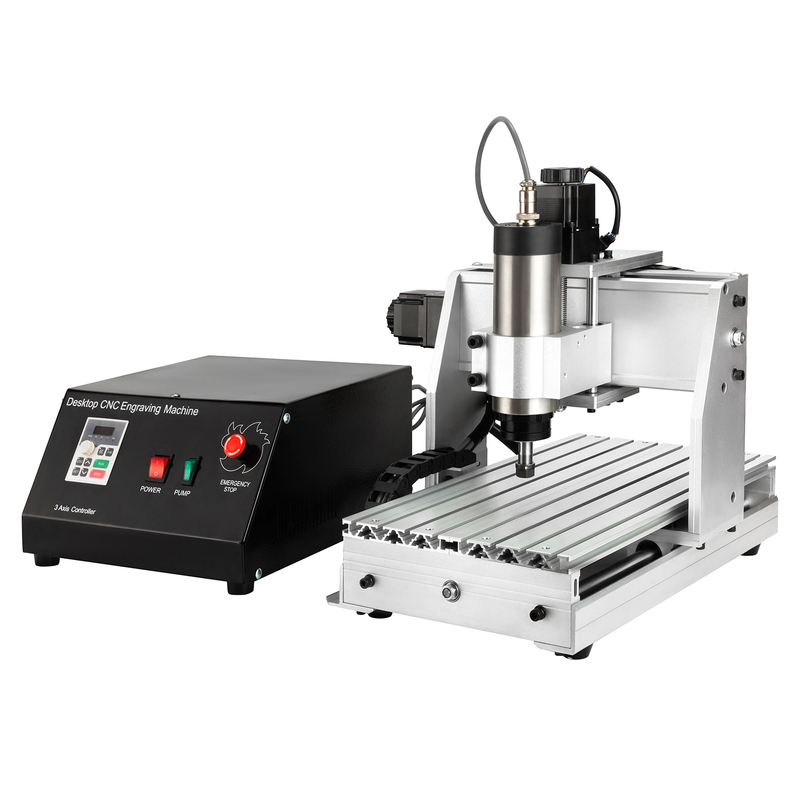
A desktop CNC router usually suggests the smallest end of the compact CNC market. It commonly targets engraving, PCB prototyping, model making, and light cutting. Many models fit near a computer, although they still need safe operating clearance. Enclosed designs are common because they help contain chips and reduce accidental contact.
A benchtop CNC router also sits on a bench or table. However, the name often covers larger, heavier, and more rigid machines. These routers may offer longer travel, stronger spindles, deeper cuts, and larger fixtures. Some need a reinforced stand, even when vendors describe them as benchtop machines.
Comparison point
Typical desktop emphasis
Typical benchtop emphasis
Placement
Desk, cabinet, or compact workstation
Strong workbench or dedicated stand
Working area
Small parts and short travel
Medium parts and longer travel
Spindle
Light engraving and shallow cutting
Higher material removal and longer jobs
Structure
Portability and enclosed operation
Rigidity, capacity, and expandability
Common user
Hobbyist, school, designer, laboratory
Workshop, startup, prototyping team
These descriptions are market tendencies, not technical standards. One supplier may call a 600 × 900 mm router “desktop.” Another may label a smaller machine “benchtop.” Therefore, the product name cannot settle a Benchtop CNC Router vs Desktop CNC Router decision.
Start with five measurable items: external dimensions, working area, machine weight, spindle rating, and positioning accuracy. Then review repeatability, drive components, electrical requirements, and supported materials. This method exposes real capability differences behind similar marketing language.
Machine construction matters equally. Aluminum profiles can provide useful stiffness without excessive weight. Steel frames usually add mass and vibration resistance. Neither material guarantees better results alone. Rail size, screw quality, gantry geometry, assembly, and spindle mounting also affect cutting behavior.
Space and Working Area: Measure More Than the Machine Footprint
The machine footprint only shows how much table surface the router occupies. A safe CNC workstation needs additional room around every moving component. It also needs space for a controller, computer, cables, cooling equipment, and dust extraction. Front access must remain clear for loading stock and changing tools.
First, identify your largest expected workpiece. Then add room for clamps, locating pins, a spoilboard, and probing hardware. A machine can accept a panel physically yet lack enough usable travel. The advertised bed size and effective working area are not always identical.
Use this installation checklist before ordering:
Measure the complete frame, including motors and cable carriers. Allow ventilation around the spindle controller and electronics. Leave service access for lubrication, inspection, and repairs.
Confirm the bench can support the machine and workpiece safely. A rigid table limits shaking during direction changes. Lockable casters require dependable brakes and a level floor.
Plan dust, chip, and noise control early. An enclosure consumes extra space but improves containment. A dust shoe also needs hose clearance across the full travel.
Check doorway, stairway, and lifting access. A heavier benchtop CNC router may require several people or lifting equipment. Removable stands do not reduce the machine’s own handling risk.
Working area determines productivity as much as physical placement. Small 3020-class machines suit badges, PCB boards, jewelry fixtures, and acrylic tags. Larger 6040 or 6090 formats accommodate signs, reliefs, molds, and nested parts. Greater travel may reduce repositioning errors during medium-size jobs.
Spindle Power, Frame Rigidity, and Material Capacity
Spindle power influences cutting depth, tool size, feed rate, and material range. A 300W spindle can handle PCB routing, foam, plastics, and light wood engraving. Higher-powered options provide more cutting reserve for acrylic, hardwood, and soft metals. However, wattage alone never proves cutting performance.
Rigidity decides whether available power becomes a clean cut or unwanted vibration. A strong spindle on a flexible frame can produce chatter, broken tools, and rough edges. Linear guides, ball screws, gantry stiffness, spindle mounts, and workholding must support the cutting load. Machine weight may help damp vibration, but sound engineering matters more.
Job type
Practical priority
Why it matters
PCB engraving
Low runout and stable Z movement
Copper traces require controlled depth
Acrylic cutting
Suitable speed, feed, and chip removal
Heat can melt edges and recut chips
Wood signs
Working area and dust extraction
Larger panels create considerable dust
Aluminum parts
Rigidity, torque, lubrication, and workholding
Chatter quickly damages finish and tools
Repeated production
Cooling, duty cycle, and component life
Long jobs expose heat and wear limits
Do not compare spindle ratings without checking cooling and duty expectations. Air-cooled spindles simplify installation and avoid water lines. Water-cooled systems can manage heat quietly during longer runs. They require a pump, reservoir, tubing, maintenance, and freeze protection where applicable.
Electrical planning also separates casual use from dependable production. Verify input voltage, current, grounding, VFD requirements, and circuit capacity. Dust collectors and computers add load to the same workspace. The router and spindle guidance in this benchtop buyer’s guide also notes that lighter routers may need shallower cuts.
Match the machine to the hardest routine job, not an unusual demonstration cut. Soft metal cutting needs conservative depth, suitable cutters, proper chip evacuation, and secure clamping. A larger benchtop CNC router usually offers more capacity, but a rigid desktop model can outperform a weak larger frame.
Precision and Repeatability: Why Smaller Does Not Always Mean More Accurate
Precision claims need careful reading because manufacturers report different measurements. Positioning accuracy describes closeness to a commanded location. Repeatability describes how reliably the machine returns there. Resolution only describes the smallest commanded movement. It does not guarantee the cutter achieves that movement under load.
A small working envelope can support high precision because shorter structures may resist bending. Enclosures also help limit debris and sudden temperature changes. Yet compact size cannot correct spindle runout, loose bearings, backlash, or poor calibration. A larger rigid machine can remain accurate across wider travel.
Several components shape real machining accuracy:
Motion system: Ball screws usually reduce backlash and improve controlled movement. Lead screws and belts can work well when correctly sized and tensioned. Wear, contamination, and alignment change their performance.
Frame and gantry: Stiff structures resist cutting forces and acceleration loads. Unsupported rails or weak joints allow tool deflection. That movement appears as dimensional error or poor surface finish.
Spindle and toolholding: Runout moves the cutting edge away from its intended path. Clean collets, balanced tools, and correct tightening protect small cutters. Shorter tool stickout generally reduces deflection.
Setup and environment: Workholding, probing, tool length, temperature, and dust affect results. Calibration should use test cuts in the target material. An unloaded motion test cannot represent every production condition.
For context, published specifications list 0.05 mm positioning accuracy for the 3020 and 6040 models. The 6090 aluminum model lists 0.03 mm. These values help comparison, but buyers should still request test methods, repeatability data, and representative samples.
Software also affects achievable detail. Confirm CAD/CAM compatibility, controller support, post-processors, and probing workflows. Fine engraving needs predictable Z control and a flat spoilboard. Aluminum work needs toolpaths matched to rigidity, spindle speed, chip load, and cooling.
The most credible precision target comes from finished parts. Ask suppliers to machine your material, geometry, tolerance, and surface requirement. Then measure several parts across the working area. Repeated results reveal more than a single showcase sample.
Best Use Cases for Desktop and Benchtop CNC Routers
A desktop CNC router is usually the stronger choice for limited space and smaller workpieces. It suits designers, laboratories, schools, jewelry makers, electronics teams, and new CNC users. Common jobs include PCB isolation, nameplates, wax models, acrylic panels, and detailed wooden parts. An enclosed unit can make chip control easier in shared rooms.
A benchtop CNC router becomes attractive when parts, fixtures, or production batches grow. It offers more room for signs, cabinet components, molds, jigs, and multiple nested pieces. Added rigidity and spindle capacity may support deeper passes and longer duty cycles. Small manufacturers often value this output more than easy portability.
Your main requirement
Better starting point
Specification to verify first
Apartment or compact studio
Desktop CNC router
Footprint, enclosure, and noise
PCB or fine engraving
Desktop CNC router
Runout, Z stability, and repeatability
Medium signs and panels
Benchtop CNC router
Effective working area
Regular hardwood cutting
Benchtop CNC router
Rigidity, spindle, and dust collection
Soft metal prototypes
Either, when suitably built
Rigidity, ball screws, and workholding
Small-batch production
Benchtop CNC router
Duty cycle, cooling, and support
Budget for the complete workflow rather than the bare machine. Essential costs may include cutters, collets, clamps, spoilboards, probing tools, software, extraction, and training. Metal work can add coolant equipment and stronger workholding. An enclosure may become necessary after purchase, affecting both cost and footprint.
Future jobs deserve attention, but oversized equipment can waste valuable space. Estimate your largest recurring part during the next two years. Choose enough travel for this work plus realistic clamping clearance. Avoid buying capacity needed only for rare projects that could be outsourced.
The China CNC Router Machine Manufacturer | ZhongHuaJiang spans compact 3020 and 3040 formats through larger 6040 and 6090 models. Available configurations include different working areas and spindle options. This range illustrates why specifications matter more than category labels.
How to Choose Between a Benchtop CNC Router and Desktop CNC Router
Begin with the part, not the machine catalog. Record material, maximum dimensions, required tolerance, surface finish, and monthly quantity. Include the smallest feature and deepest cut. These details establish realistic travel, rigidity, spindle, and controller requirements.
Next, score each candidate against the same purchase checklist:
1. Confirm usable travel. Compare X, Y, and Z travel against fixtures and tool clearance. Check whether motors or clamps reduce access near the edges.
2. Match power to materials. Review spindle power, speed range, torque behavior, collet sizes, cooling, and duty cycle. Ask for cutting examples using your hardest regular material.
3. Verify structural details. Examine frame construction, linear guides, screws, bearings, gantry support, and machine weight. Request close photographs and maintenance instructions.
4. Validate precision evidence. Compare positioning accuracy and repeatability separately. Ask how each value was measured. Request several sample parts rather than one ideal result.
5. Plan the full workstation. Add controller space, ventilation, extraction, noise control, electrical load, and operator access. Confirm the bench and floor can support everything.
6. Review support and parts. Check documentation, software compatibility, replacement components, warranty terms, and technical response times. Production downtime can exceed the original price difference.
A simple decision rule works for most buyers. Choose desktop when compact placement, enclosure, and fine small-part work dominate. Choose benchtop when working area, rigidity, cutting capacity, and throughput dominate. Compare actual specifications whenever those priorities overlap.
Send suppliers a short requirement sheet before requesting quotations. Include drawings, material grades, tolerance ranges, expected hours, voltage, and destination. Ask them to identify recommended spindle power and workholding. Clear requirements make competing quotations easier to compare.
Changzhou Huajiang Electrical supports customized CNC router and spindle configurations through its research and development team. Buyers with unusual parts should discuss working area, spindle selection, axis count, and electrical needs before finalizing a configuration.
Conclusion
The Benchtop CNC Router vs Desktop CNC Router choice cannot rely on naming alone. Compare usable travel, total footprint, spindle power, rigidity, precision evidence, and workflow costs.
Desktop models favor compact, detailed work. Benchtop models often favor capacity and throughput. Choose the machine proven on your real materials, parts, and production schedule.
FAQs About Benchtop CNC Routers and Desktop CNC Routers
Q: Are benchtop and desktop CNC routers the same?
A: The terms often overlap because no universal size standard separates them. “Desktop” usually suggests a smaller, lighter, or enclosed machine. “Benchtop” often suggests greater working area and rigidity. Always compare dimensions, weight, travel, spindle power, and construction instead of trusting the category name.
Q: Which CNC router is better for a small workshop?
A: A desktop CNC router works well when floor space and small-part precision lead the decision. A benchtop router suits workshops processing larger panels or longer batches. Measure the complete workstation, including extraction, electronics, stock handling, and operator access, before choosing.
Q: Can a desktop CNC router cut aluminum?
A: Some desktop CNC routers can machine aluminum using shallow passes and suitable cutters. Successful results require a rigid frame, low spindle runout, secure workholding, correct chip load, and effective chip removal. Confirm capability through samples made from your alloy and required geometry.
Q: How much spindle power does a small CNC router need?
A: About 300W can suit PCB work, foam, plastics, and light engraving. Higher power supports larger tools, deeper cuts, and harder materials. Power must match frame rigidity, spindle speed, cooling, and duty cycle. More wattage cannot compensate for chatter or poor workholding.
Q: Does a larger working area reduce CNC accuracy?
A: Not automatically. Larger structures need adequate support because rails and gantries can deflect across longer spans. A well-built larger router can remain precise. Compare positioning accuracy, repeatability, backlash, frame construction, and measured sample parts across the whole working area.
Q: What should I ask a CNC router supplier before buying?
A: Provide part drawings, materials, tolerances, quantities, voltage, and available space. Request effective travel, external dimensions, weight, spindle specifications, repeatability, controller details, software support, and warranty terms. Ask for representative test cuts and replacement-part availability.
Join us as an exclusive distributor of CNC Router Machines and CNC Spindle Motors. As a professional manufacturer, we provide high-performance machines, attractive profit margins, technical training, and full marketing support. Build a strong partnership with us and expand your market with confidence.


 English
 简体中文
简体中文 繁體中文
繁體中文 العربية
 Français
 Русский
 Español
 Português
 Deutsch
 italiano
 日本語
日本語 한국어
한국어 Nederlands
 Tiếng Việt
 ไทย
ไทย Polski
 Türkçe
 አማርኛ
አማርኛ ພາສາລາວ
 ភាសាខ្មែរ
 Bahasa Melayu
 ဗမာစာ
ဗမာစာ தமிழ்
தமிழ் Filipino
 Bahasa Indonesia
 magyar
 Română
 Čeština
 Монгол
 қазақ
қазақ Српски
 हिन्दी
 فارسی
فارسی Kiswahili
 Slovenčina
 Slovenščina
 Norsk
Norsk Svenska
 українська
 Ελληνικά
 Suomi
Suomi Հայերեն
 עברית
עברית Latine
 Dansk
Dansk اردو
اردو Shqip
Shqip বাংলা
বাংলা Hrvatski
 Afrikaans
 Gaeilge
 Eesti keel
 Māori
Māori සිංහල
සිංහල नेपाली
 Oʻzbekcha
 latviešu
 অসমীয়া
 Aymara
 Azərbaycan dili
 Bamanankan
 Euskara
 Беларуская мова
 भोजपुरी
 Bosanski
 Български
 Català
 Cebuano
 Corsu
Corsu ދިވެހި
 डोग्रिड ने दी
 Esperanto
 Eʋegbe
 Frysk
Frysk Galego
 ქართული
 guarani
 ગુજરાતી
 Kreyòl ayisyen
 Hausa
Hausa ʻŌlelo Hawaiʻi
 Hmoob
Hmoob íslenska
 Igbo
Igbo Ilocano
 Basa Jawa
 ಕನ್ನಡ
ಕನ್ನಡ Kinyarwanda
 गोंगेन हें नांव
 Krio we dɛn kɔl Krio
 Kurdî
Kurdî Kurdî
Kurdî Кыргызча
 Lingala
 Lietuvių
 Oluganda
 Lëtzebuergesch
 Македонски
 मैथिली
 Malagasy
 മലയാളം
 Malti
Malti मराठी
मराठी ꯃꯦꯇꯥꯏ (ꯃꯅꯤꯄꯨꯔꯤ) ꯴.
 Mizo tawng
 Chichewa
 ଓଡ଼ିଆ
ଓଡ଼ିଆ Afaan Oromoo
 پښتو
پښتو ਪੰਜਾਬੀ
 Runasimi
 Gagana Samoa
 संस्कृत
 Gaelo Albannach
 Sepeti
 Sesotho
 chiShona
 سنڌي
سنڌي Soomaali
 Basa Sunda
 Wikang Tagalog
 Тоҷикӣ
 Татарча
 తెలుగు
 ትግንያውያን
 Xitsonga
 Türkmençe
 संस्कृत
 ئۇيغۇرچە
 Cymraeg
 isiXhosa
 ייִדיש
 Yorùbá
 isiZulu